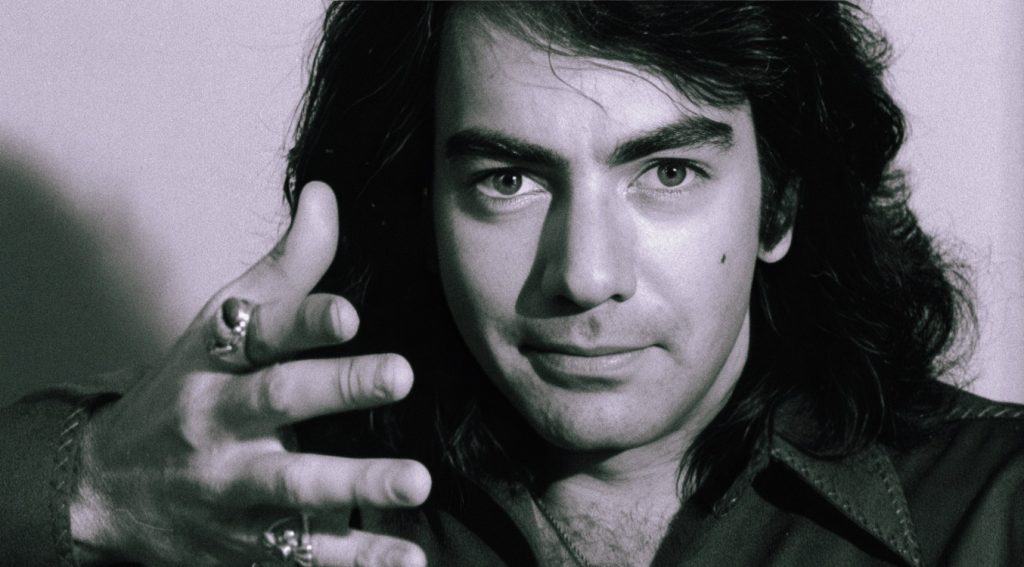
Neil Diamond in concert for The BBC – recorded on June 21, 1971 – BBC Radio 1
Starting the week on a quieter than usual note – thinking a dose of calm might be a good companion for lunch.
Neil Diamond was one of those artists in the 60s who spanned a large and diverse audience. The reason was simple; he was good at what he did and his message was urgent and relevant to just about everyone he came within earshot of. He has become widely regarded as one of America’s best tunesmiths and he has been responsible for some 130 million album sales over the years.
From Wikipedia:
For his 16th birthday, Neil Diamond received his first guitar. When he was still in high school, Diamond spent a number of weeks at Surprise Lake Camp, a camp in upstate New York for Jewish children, when folk singer Pete Seeger performed a small concert. Seeing the widely recognized singer perform, and watching other children singing songs for Seeger that they wrote themselves, had an immediate effect on Diamond, who then became aware of the possibility of writing his own songs. “And the next thing, I got a guitar when we got back to Brooklyn, started to take lessons and almost immediately began to write songs”, he said. He added that his attraction to songwriting was the “first real interest” he had growing up, while also helping him release his youthful “frustrations”.
Diamond also used his newly developed skill to write poetry. By writing poems for girls he was attracted to in school, he soon learned it often won their hearts. His male classmates took note and began asking him to write poems for them, which they would sing and use with equal success. He spent the summer after graduation working as a waiter in the Catskills resort area.
Diamond wrote wherever he could, including on buses, and used an upright piano above the Birdland Club in New York City. One of the causes of this early nomadic life as a songwriter was his songs’ wordiness: “I’d spent a lot of time on lyrics, and they were looking for hooks, and I didn’t really understand the nature of that”, he says. He was able to sell only about one song a week during those years, barely enough to survive. He found himself only earning enough to spend 35 cents a day on food (equivalent to $4 in 2024). But the privacy that he had above the Birdland Club allowed him to focus on writing without distractions. “Something new began to happen. I wasn’t under the gun, and suddenly interesting songs began to happen, songs that had things none of the others did.” Among them were “Cherry, Cherry” and “Solitary Man“. “Solitary Man” was the first record that Diamond recorded under his own name which made the charts. It remains one of his personal favorites, as it was about his early years as a songwriter, even though he failed to realize it at the time. He describes the song as “an outgrowth of my despair”.
In 1967, Diamond was featured on the fourth episode of the detective drama Mannix as the ‘featured’ artist in a small underground club called ‘The Bad Scene’ and was interrupted during his singing by one of many fights that took place weekly on the show.
In 2000, Neil Diamond appeared onstage with a Diamond tribute band, Super Diamond, surprising them before their show at House of Blues in Los Angeles.
In the 2001 comedy film Saving Silverman, the main characters play in a Diamond cover band; Diamond made an extended cameo appearance as himself. Diamond even wrote and composed a new song, “I Believe in Happy Endings”, for the film. He sat in with the tribute band Super Diamond at the film’s premiere party.
In recent times, fans of the England national football team sing Sweet Caroline since Tony Parry (Wembley DJ) played it after England had defeated Germany at Wembley in Euro 2020. He said “I thought Sweet Caroline went slightly better than Three Lions in the post-match sing-song.”
Sadly, in January 2018, Neil Diamond announced that he would stop touring after he was diagnosed with Parkinson’s disease. Tour dates on the final leg of Diamond’s “50 Year Anniversary World Tour” in Australia and New Zealand were cancelled. An announcement on his official website said he was not retiring from music and that the cancellation of the live performances would allow him to “continue his writing, recording and development of new projects.”
For a reminder of Neil Diamond’s rich legacy, here is the concert he did for BBC Radio 1’s In Concert series from June 21, 1974.