Bill Evans – sublime impressionist
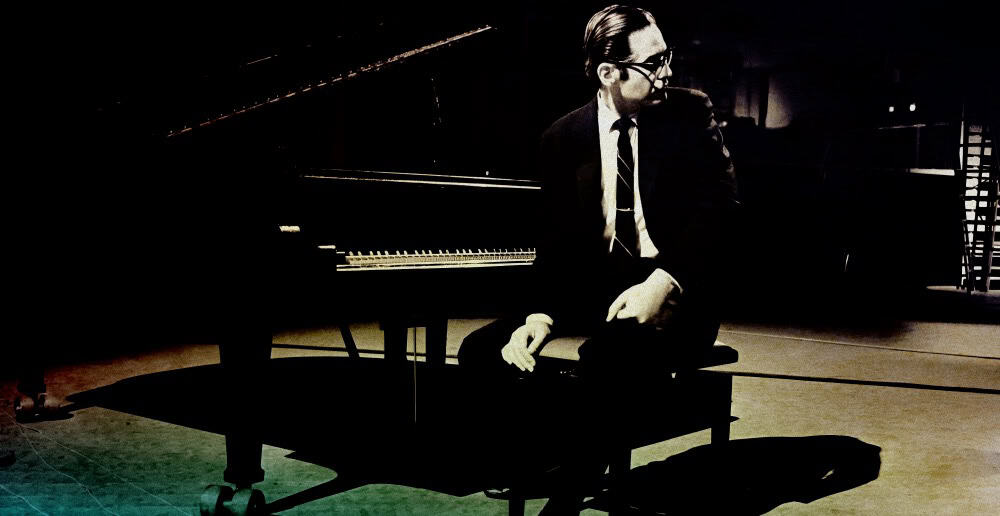
Bill Evans Trio this week – recorded at the BBC – March 19, 1965 for the Jazz 625 Program.
Bill Evans for this holiday weekend. Putting the Sunday after Thanksgiving in a mellow and serene place with this session, part of the BBC’s Jazz 625 program, originally recorded on March 19, 1965 and broadcast in two parts.
The sheer number of live performances captured via the Radio and from collectors and issued, both officially and unofficially is pretty impressive. But Bill Evans was an artist whose creative message and output are still being discovered and inspiring countless pianists, venturing into the veritable ocean of sublime creation that is continuing to leave its indelible imprint on the world of Jazz and Music in general.
Impressionist is a word I’ve heard being used to describe the music of Bill Evans – totally apropos – you can also add Colorist to the mix, because Bill Evans used a canvas of immense possibilities – creating a sonic landscape compelling and wondrous – nice when that happens. And Bill Evans was a master at it.
A little historic background on the period of time this particular session is associated with via Wilipedia:
In late June 1961, Riverside recorded Evans’s trio live at the Village Vanguard, resulting in the albums Sunday at the Village Vanguard and Waltz for Debby. (Further recordings from this performance were issued in 1984 as More From The Vanguard.) Evans later showed special satisfaction with these recordings, seeing them as the culmination of his trio’s musical interplay.
After Evans re-formed his trio in 1962, two albums, Moon Beams and How My Heart Sings!, resulted. In 1963, at the beginning of his association with Verve, he recorded Conversations with Myself, an album that featured overdubbing, layering up to three tracks of piano for each song. The album won him his first Grammy award.
Evans’s heroin addiction worsened after Scott LaFaro’s death (his bass player from 1959 until the fatal car accident in 1961). His girlfriend Ellaine Schultz was also an addict. Evans habitually borrowed money from friends, and eventually his electricity and telephone services were shut down. He said: “You don’t understand. It’s like death and transfiguration. Every day you wake in pain like death and then you go out and score, and that is transfiguration. Each day becomes all of life in microcosm.”
Evans never allowed heroin to interfere with his musical discipline, according to a 2010 BBC article that contrasts his addiction with Chet Baker‘s. On one occasion while injecting heroin, Evans hit a nerve and temporarily disabled it, performing a full week’s engagement at the Village Vanguard virtually one-handed.[9] During this time, Helen Keane began to have an important influence, as she significantly helped maintain Evans’s career despite his self-destructive lifestyle, and the two developed a strong friendship.
In summer 1963, Evans and Schultz left their flat in New York and settled in his parents’ home in Florida, where, it seems, they quit the habit for some time. Even though never legally married, Bill and Ellaine were in all other respects husband and wife. At that time, Schultz meant everything to Evans, and was the only person with whom he felt genuine comfort.
Although he recorded many albums for Verve, their artistic quality has typically been viewed as uneven. Despite Israels’s fast development and the creativity of new drummer Larry Bunker, the album Bill Evans Trio with Symphony Orchestra, featuring Gabriel Fauré‘s Pavane and works of other classical composers arranged by Claus Ogerman divided critical opinion. Some recordings in unusual contexts were made, such as a concert recording with a big-band recorded at Town Hall that was never issued owing to Evans’s dissatisfaction with it (although the more successful jazz trio portion of the concert was released). Live recordings and bootleg radio broadcasts from this period represent some of the trio’s better work.
In 1965, the trio with Israels and Bunker went on a well-received European tour.
That gives you a bit of historic context to this session. I would suggest you go on an exploration if you aren’t already familiar – it could work wonders.
In the meantime, enjoy.