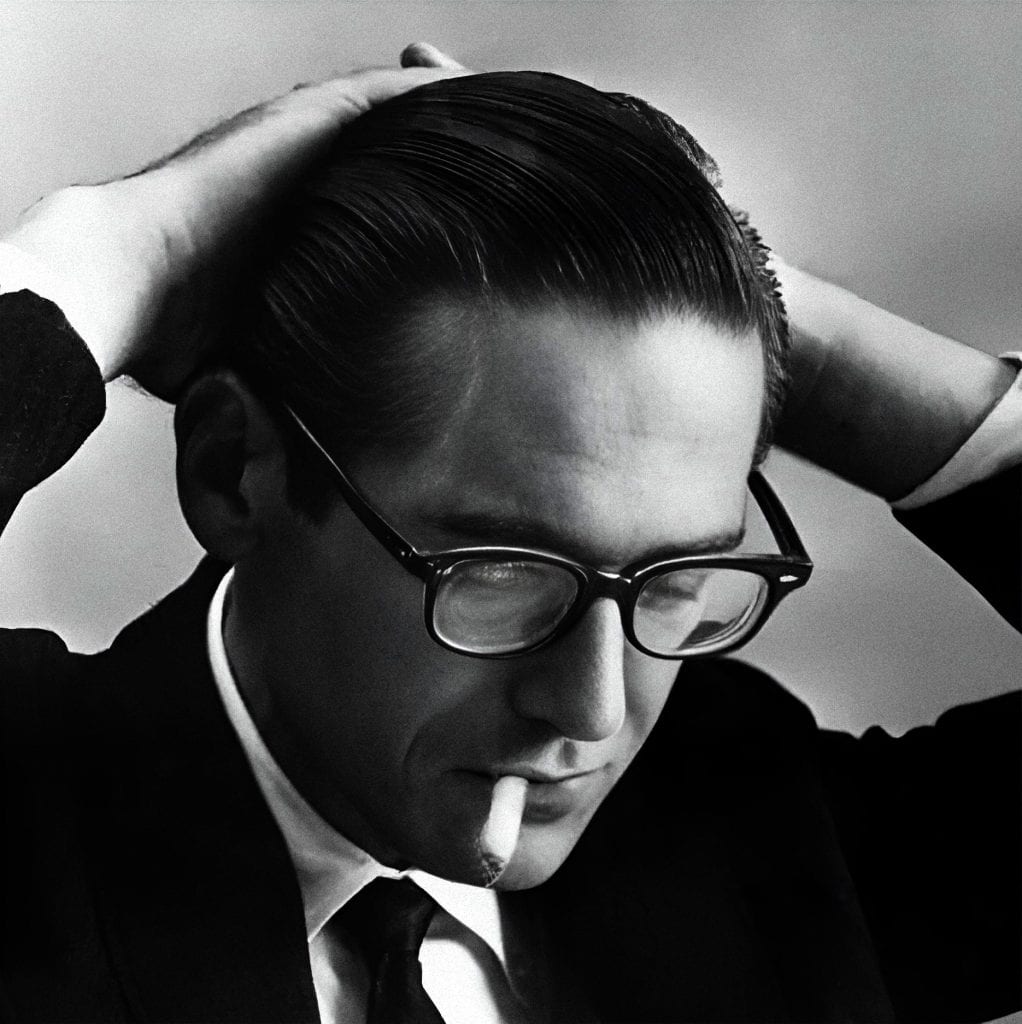
Diving into some history this weekend. Bill Evans, along with Joe LaBarbera and Marc Johnson appearing a Lulu White’s in Boston, recorded on October 30, 1979 and preserved for posterity by WGBH in Boston.
The following is a snippet from an excellent background piece on Evans, appearing on the All About Jazz blog:
“Evans’ mature style has been such a pervasive influence in jazz piano over the past thirty years that in many ways it is almost undetectable. We can speak of his highly nuanced touch, his melodic shapes, and his chord voicings and still be at a distance from the essence of his sound. To clarify this essence it is useful to isolate and describe the elements of his style, which other pianists have picked up with different degrees of fidelity to Evans, and then see what is left to Evans alone.
At the most general level, jazz pianists today tend to sound more like Evans than they do like his two great piano predecessors and influences, Bud Powell, and Lennie Tristano. Like Evans and unlike Powell and Tristano, the contemporary style utilizes a greater proportion of shaped phrases than continuous lines; it utlizes a greater proportion of chromaticism and non-major scale modes than Powell certainly; and it utilizes Evans’ chord voicings as a point of departure for its harmonic conception. After this, approaches to touch, harmony, and melodic shape are highly individualized.
At closer stylistic proximity to Evans are the members of his “school,” mentioned above, whose playing makes direct reference to his style. In the work of these pianists you will hear more frequently such typical Evans traits as moving inner voices, fleet block chord melodies, rhythmically truncated melodic lines which leave the listener in mid-air, scalar passages- especially diminished scales-in thirds, and his poignant harmonies, including reharmonizations and original tunes with harmonic structures similar to those Evans used.
Yet when you listen closely to the recordings of Evans himself you hear things not present even in his closest followers, for example, the fine gradation of touch that offers up emotional nuance at a truly surprising level of sensitivity. Any of Evans’ external figures can be imitated, even nuances of touch, but that’s just the surface structure of his music. The key to the uniqueness of his sound which is immediately identifiable and has never been perfectly duplicated by anyone, lay deep within his aesthetic consciousness. Putting into perspective how he arrived at his sound offers a clue to the nature of this consciousness, this emotional intention expressed musically, which is the deep engine of his music and accounts for its uniqueness.”
Go over to the site and read more about Bill Evans – in the meantime, Press play and relax – it’s Sunday after all.