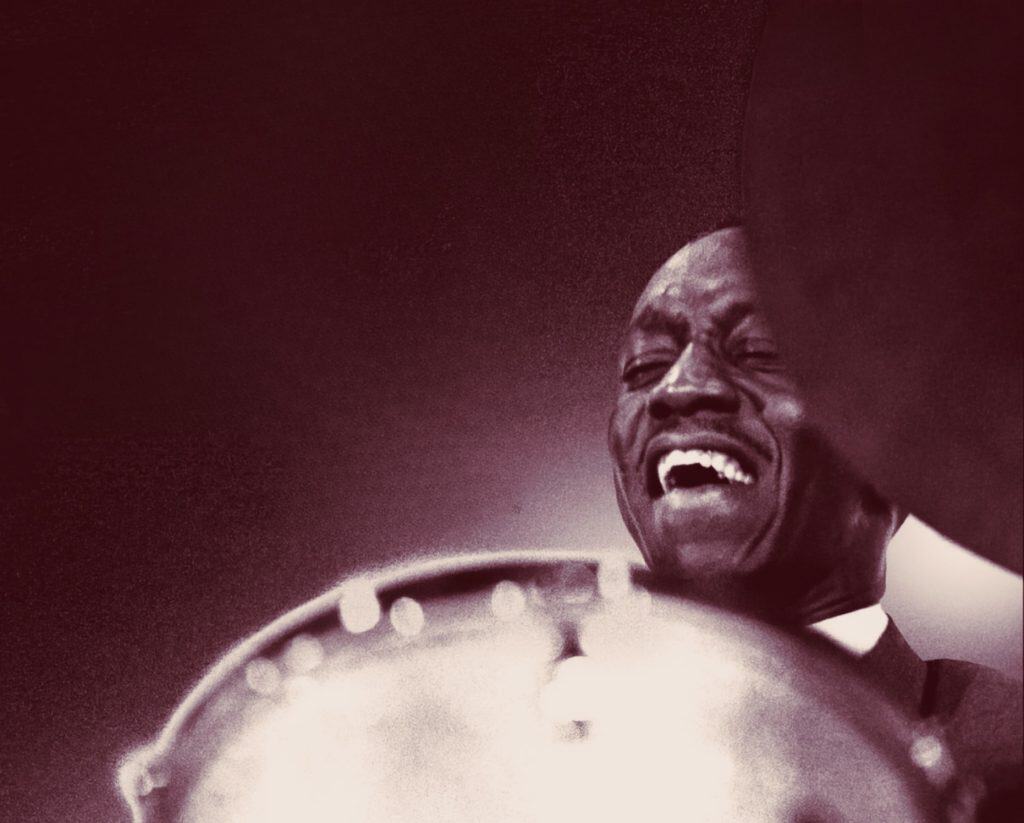
Art Blakey And The Jazz Messengers for this Downbeat session – recorded in Zurich on December 4, 1958 by RTS, Switzerland.
Featuring – Lee Morgan -trumpet; Benny Golson -tenor sax; Bobby Timmons -piano and Jymie Merritt -bass.
If you haven’t had a chance to check it out, I would urge you (diehard Blakey fan or casual imbiber) to go over to the Art Blakey Estate site. It’s a treasure trove of biography, discography and sessionography. Lovingly laid out and massively informative, it will keep you busy for hours and give you plenty of opportunities to make your own discoveries.
That said, here’s what National Endowment for The Arts has to say:
Art Blakey’s Jazz Messengers not only supplied consistently exciting and innovative music for nearly 40 years, but also provided the experience and mentoring for young musicians to learn their trade. Though self-taught, Blakey was already leading his own dance band by age 14. Blakey’s first noted sideman job came in 1942 with Mary Lou Williams, whom he joined for a club engagement at Kelly’s Stables in New York. The following year he joined the Fletcher Henderson Orchestra, where he stayed until joining Billy Eckstine’s modern jazz big band in 1944. A subsequent trip to Africa, ostensibly to immerse himself in Islam, revealed to him that jazz was truly an American music, which he preached from the bandstand thereafter. He adopted the Muslim name of Abdullah Ibn Buhaina, but continued to record under Art Blakey.
In the early 1950s, he worked with such greats as Miles Davis, Charlie Parker, Horace Silver, and Clifford Brown. The latter two became members of the Jazz Messengers, which was originally a cooperative unit. Brown, then Silver, left to form their own bands and Blakey became the leader of the Jazz Messengers. The Messengers went on to play in a style that critics called hard bop, a logical progression on the bebop style that was more hard-driving and blues-oriented. The Messengers made a concerted effort at rekindling the black audience for jazz that had begun to erode when the ballroom era of jazz declined.
Blakey powered his bands with a distinctive, take-no-prisoners style of drumming that recalled the thunderous and communicative drum traditions of Africa. Though his drumming became among the most easily recognized sounds in jazz, Blakey always played for the band, prodding on his immensely talented colleagues’ solos.
Over to you – press play and dive in.