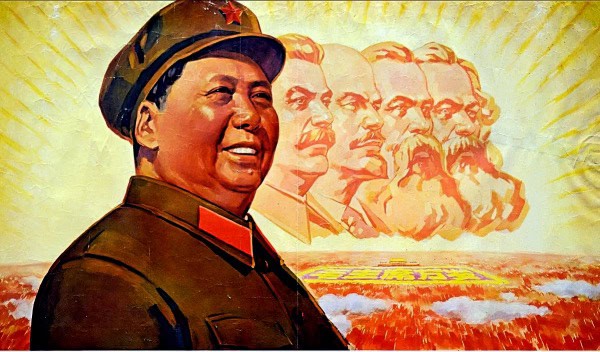
With the war in Korea a little over 9 months old, and the increasing influence of China by way of military aid and a bombardment of propaganda, the very real possibility that Korea would become the flashpoint for a Third World War was becoming an increasing concern to those in the region and those in the West.
If not a Third World War in the shooting sense, it was a Cold War in the wages of fear sense. Coupled with the notion that Soviet Russia and Red China were becoming allied against the west, boasting a combined troop strength of some four million – the battle to wins hearts and minds was nearing fever pitch. With an ever increasing sphere of influence by way of the Iron Curtain countries; those East European nations bordering the Soviet Union, formerly overrun by Nazi Germany were now under the influence of Moscow, China was now on its own mission to create satellite nations in the form of Vietnam and throughout Southeast Asia. The seeds of rebellion were in full bloom in Indochina with forces led by Ho Chi Minh seeking to oust the French from their colonial possession – eventually succeeding a few years later.
But it was against this backdrop of the Korean War that brought the panel consisting of Philips Talbot, Albert Ravenholt and Jack Barda, all Asia watchers for this broadcast of The Chicago University Roundtable from March 26, 1951. Questions were still looming about just how much of a threat to the region was Red China – it was only two years since its own Civil War ousted the Nationalist government of Chiang-Kai Shek, forcing them into exile by way of Taiwan, a neighboring island which became a bone of contention ever since. China, though strong in numbers, many felt wasn’t able to carry on a full scale war on its own; not without the aid of the Soviet Union, whom in 1951 had a warm if not tentative relationship. So Chinese troops were actively engaged in the Korean conflict, equipped largely by the Soviet Union in arms, ordinance and planes.
This was the climate in 1951 – a War in Korea – a land grab of influence by the Communists – the Red Scare at home – threat of an all-out Atomic War – Communist influence in European elections – a Middle East hanging in the balance with Iran fending off overtures from Russia while trying to keep possession of their oil.
Not a “feel good” period of time, you must admit – but what was needed were cool heads and pragmatic visions and even though some of these assessments may seem drawn out and cumbersome to listen to, they provided a solid basis for discussion on just where the world was heading in 1951.
Here is that episode (a little muddy sounding, but I tried) from March 26, 1951 – The Chicago University Roundtable from NBC Radio.