Another rarity from Swiss Radio this week. Another work by the Contemporary composer Peter Meig. His Rondeau Symphonique, composed in 1964 featuring the Berne Symphony conducted by Paul Kletzki. The concert was broadcast live by RTS on May 8, 1965.
During his school years, Perter Mieg took piano lessons from Carl Arthur Richter, music director and composer in Lenzburg; his first attempts at composition date back to 1918. After graduating from high school in Aarau in 1927, Mieg studied art history , archaeology , music history and German and French literature in Zurich, Basel and Paris. At the same time, he took piano lessons from Emil Frey in Zurich and Hans Münch in Basel. In 1933, Mieg wrote a dissertation entitled Morgenthaler, Moillet, Eppler – Studies on modern watercolor painting in Switzerland . He then turned to journalism and worked full-time as an art, music and literary critic for the Basler Nachrichten, the Weltwoche, the Badener Tagblatt and various magazines.
In the years 1933–1939 he became acquainted with Paul Sacher and the composers Bartók, Conrad Beck, Stravinsky, Honegger and Martinů. In 1934 he became friends with the painter Marguerite Ammann and the painter Franz Max Herzog. In 1939 Peter Mieg moved back to Lenzburg, where he initially lived in the house “Sonnenberg” rented by his father. He bought the property in 1955. During the war years Mieg also worked as an aide to the Lenzburg town clerk. As a correspondent he made numerous trips abroad to music festivals in Austria, France, Italy and Germany.
From 1942 onwards, Peter Mieg was advised by Frank Martin on compositional matters for several years. His real breakthrough as a composer came in the early 1950s, particularly with the Concerto da Camera per archi, pianoforte e timpani (1952) and the Concerto per clavicembalo e orchestra da camera (1953), both premiered by the Zurich Chamber Orchestra. The latter was also played by the Berlin Philharmonic in 1956, with Silvia Kind as soloist. From then on, Mieg composed exclusively on commission, for example the music for harpsichord, two wind instruments and four strings (1954) for Radio Basel, the Symphony (1958) for the Tonhalle Orchestra Zurich , the Concerto for Piano and Orchestra No. 2 (1961) for the Orchestre de Chambre de Lausanne , the Concerto for Flute and String Orchestra (1962) for the Bern Chamber Orchestra and the Triple Concerto dans le goût italien (1978) for the Festival Strings Lucerne . Numerous performances followed at home and abroad. A friendship began with the composer Gottfried von Einem , the conductor Edmond de Stoutz – for the Zurich Chamber Orchestra, which he conducted, Mieg wrote numerous works – and the composer Alexander Tscherepnin .
The focus of Peter Mieg’s work is clearly his musical oeuvre, which includes around 135 compositions and in which he has developed a personal style of neoclassicism. The focus is on instrumental concertos, chamber music and piano music.
Born in Poland in 1900, Paul Kletzki was a child prodigy on the violin. At 15, he became the youngest member of the Lodz Symphony Orchestra; but his career was interrupted by the Polish-Soviet War of 1919-21. A Russian bullet grazed the head of soldier Kletzki, coming within an inch of killing him. After the war, he headed to Berlin for music studies. His conducting and composing attracted the attention of Toscanini and, especially, Wilhelm Furtwangler, the newly appointed Music Director of the Berlin Philharmonic. Paul Kletzki guest-conducted the Philharmonic at 25, and a fast rise for the young man seemed assured. But other events in Germany were about to boil over.
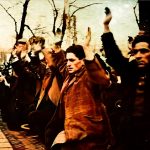
Furtwangler hired him as his Assistant Conductor, but what was to be his 1933 debut concert took place without him on the podium. The Nazi Party had just taken power, and they would not allow this Jewish musician to enjoy such an exalted position. He fled the country, leaving behind much of his music, and saying later that all of the plates for his published music were melted down. Escaping to Italy, Paul Kletzki had to leave because of the Fascist anti-Semites there, and the story repeated itself with the Communists when he went to the Soviet Union. He finally ended up in Switzerland, safe, but with no prospects for work.
During all this time he produced fascinating music, but at 42 he gave up composing for good. All of the unceasing oppression had killed that particular creative spirit in him. But Paul Kletzki found conducting to be the outlet he needed. He led many orchestras, including the Kharkov and Israel Philharmonics, the Dallas Symphony, and the Orchestre de la Suisse Romande. He was a sought-after conductor, and many saw in him the qualities first discovered by Furtwangler.
Enjoy this little known work by Peter Mieg and be surprised.