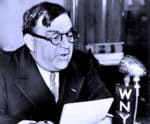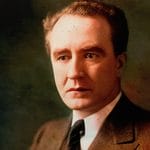
The American automobile industry in 1938 was emerging cautiously from one of the most difficult decades in its history. Although the worst years of the Great Depression had passed, the economy remained uncertain, consumer confidence was fragile, and automobile manufacturers were still struggling to regain the momentum they had enjoyed during the prosperous 1920s. By the autumn of 1938, however, there were signs of renewed optimism, particularly at the annual Detroit Auto Show, where manufacturers unveiled their 1939 models with unprecedented enthusiasm. It was in this atmosphere that Ford Motor Company executive J.R. Davis spoke confidently during a CBS Radio interview on November 11, 1938, praising Ford’s upcoming line of automobiles and expressing belief in a brighter future for the industry.
The automobile business had suffered heavily during the Depression. Car sales collapsed after the 1929 stock market crash, and by the early 1930s many factories were operating at a fraction of their capacity. Even by 1938, the nation was still coping with what historians often call the “Roosevelt Recession” of 1937–1938, a sharp economic downturn that interrupted the recovery efforts of the New Deal era. Unemployment remained high, and Americans were cautious about making major purchases such as automobiles.
Yet despite these difficulties, the automobile industry remained one of the country’s most important economic engines. Detroit’s “Big Three” — Ford Motor Company, General Motors, and Chrysler Corporation — understood that survival depended on convincing consumers that new cars were not merely luxuries, but symbols of progress, reliability, and modern living. Annual model changes became increasingly important during the late 1930s, with manufacturers emphasizing style, comfort, and technological refinement to attract buyers back into showrooms.
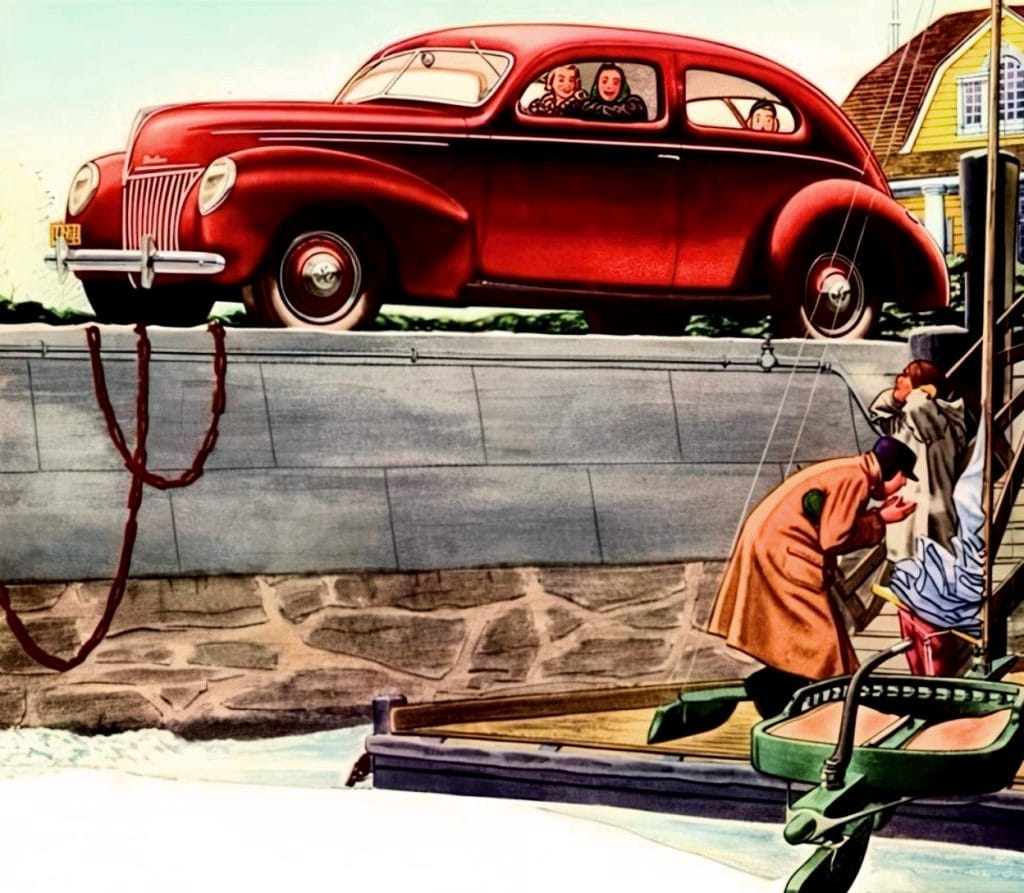
Ford, in particular, had reason for renewed confidence in 1938. The company had introduced several important improvements that helped restore its competitive position after difficult years earlier in the decade. The 1939 Ford line featured updated styling, improved safety, better suspension systems, and enhanced comfort. Streamlining had become fashionable, influenced by aviation and industrial design trends, and Ford’s new models reflected this modern aesthetic with lower profiles, integrated fenders, and more graceful body lines.
Equally important was Ford’s continued promotion of its V-8 engine, first introduced in 1932. By 1938 the Ford V-8 had become one of the company’s strongest selling points. It offered power and performance at a price ordinary middle-class Americans could afford, distinguishing Ford from many competitors. Consumers increasingly associated the Ford name with value, durability, and engineering innovation.
J.R. Davis’s enthusiasm during the CBS interview also reflected broader hopes for economic recovery. Auto executives believed pent-up demand existed among Americans who had postponed buying cars during the Depression years. Many families were still driving aging vehicles from the late 1920s or early 1930s, and manufacturers anticipated that improving economic conditions would finally encourage replacement purchases. The 1939 models were therefore marketed not only as new automobiles, but as evidence that American industry itself was regaining confidence.
There was also a psychological dimension to the excitement surrounding the 1939 automobiles. International tensions were growing rapidly in Europe, and Americans followed world events with concern. Against this uneasy global backdrop, the Detroit Auto Show represented something reassuringly domestic and forward-looking: American ingenuity, industrial strength, and consumer optimism. For executives like J.R. Davis, enthusiasm was not merely salesmanship — it was part of a broader effort to convince Americans that prosperity and progress were returning after nearly a decade of hardship.
In retrospect, the optimism surrounding the 1939 models proved justified. Automobile sales improved considerably as the nation moved toward recovery, and within only a few years the industry would become central to America’s massive wartime industrial mobilization. The confident tone heard in Detroit during November 1938 marked an important turning point, when the automobile industry began to believe once again in its own future.
Here is Robert Trout’s interview with J.R. Davis, which he conducted during the 1938 Auto Show in Detroit on November 11, 1938.