The Office of Price Administration: Holding the Line on the Home Front
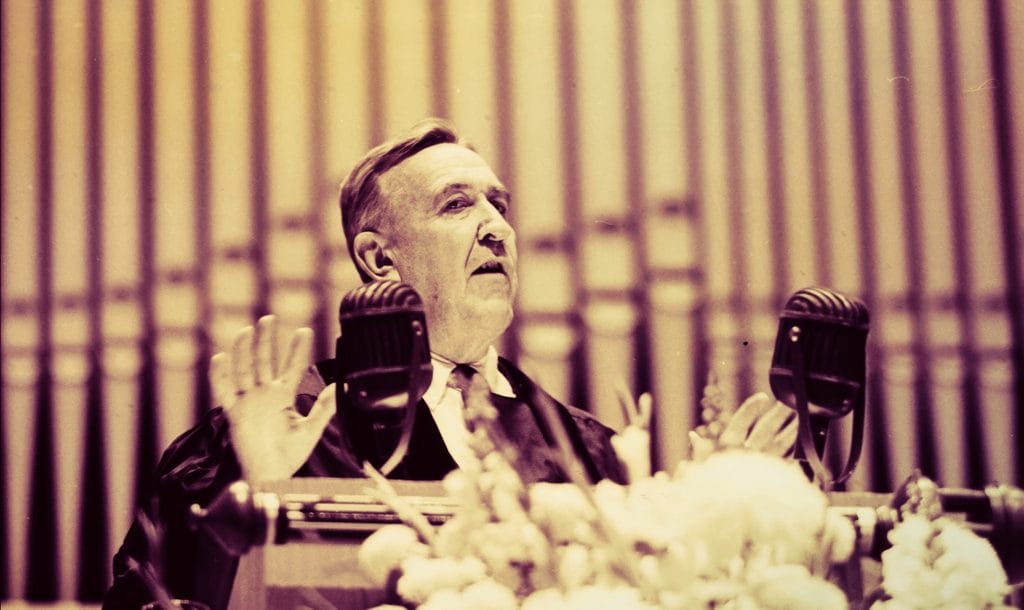
By December 1944, the Office of Price Administration had become one of the most visible—and controversial—agencies of the American home front. In a talk delivered on December 18, 1944, OPA Administrator Chester Bowles defended an agency whose mission was deceptively simple: keep the wartime economy from spinning out of control. Behind that mission, however, was an enormous and complicated undertaking involving prices, shortages, rationing, production and, ultimately, the question of who would bear the economic costs of war.
The OPA had emerged from the federal government’s preparations for war and was given independent-agency status by the Emergency Price Control Act of January 1942. Its responsibilities included establishing maximum prices for commodities and rents, rationing scarce goods, and authorizing subsidies for the production of certain commodities.
The need was obvious. American industry was producing on an unprecedented scale, but much of that production was destined for the military. Civilian supplies were consequently restricted, creating the potential for shortages, hoarding and rapidly rising prices. The OPA attempted to distribute what remained as equitably as possible. Tires, automobiles, shoes, nylon, sugar, gasoline, fuel oil, coffee, meat and processed foods all came under various forms of rationing or control. At the height of the program, price controls covered an extraordinary portion of everyday consumer life.
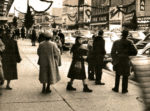
Rationing was not simply about limiting consumption. It was an attempt to make scarcity fair. A ration book and a fixed price meant that access to necessities was not supposed to depend entirely on who could afford to pay the highest price. The National Archives notes that OPA programs affected virtually every American household, bringing the machinery of wartime government directly into local communities through thousands of local price and rationing boards.
That visibility also made the OPA a target. In his December 1944 talk, Bowles described organized interests attempting to undermine or destroy the agency. To its critics, price controls interfered with business and restricted the ability of producers and retailers to respond to changing economic conditions. To Bowles and the agency’s defenders, however, dismantling controls in the middle of a war threatened to turn scarcity into inflation—and to allow those with greater economic power to profit disproportionately from wartime shortages.
The remarkable thing was that, despite the controversy, the OPA retained considerable public support. Its opponents increasingly argued that controls should disappear as the nation moved toward peace and a civilian economy. Most price and rationing controls were eventually lifted between August 1945 and November 1946. The OPA itself was transferred into the Office of Temporary Controls in December 1946 and finally abolished effective May 29, 1947.
The story of the OPA is therefore about more than wartime price tags and ration books. It represents one of the largest experiments in managing an economy during national emergency—and the enduring argument over how much government should intervene when scarcity, inflation and competing economic interests collide.
Here is that address by Chester Bowles, one of his weekly broadcasts carried by The Blue Network of NBC on December 18, 1944.