Immigration in America, 1988: Living in the Shadows
By January 1988, the American immigration debate had entered a new and uncertain phase. For decades, undocumented workers had been part of the American labor force, often occupying jobs that were difficult, poorly paid, or unwanted by many American workers. But the Immigration Reform and Control Act of 1986 had fundamentally changed the rules. For the first time, federal law made it illegal for employers knowingly to hire unauthorized workers, while at the same time offering a path to legal status for millions of undocumented immigrants who had already established lives in the United States.
It was an ambitious attempt to address two sides of the immigration problem at once: legalization for those already here and sanctions against employers who continued to hire people without authorization. The law required employers to verify the identity and employment eligibility of new workers through documentation and an employment eligibility form. Employers who knowingly violated the law could face civil penalties and, in some circumstances, criminal sanctions.
But the law also produced an unexpected human consequence: fear.
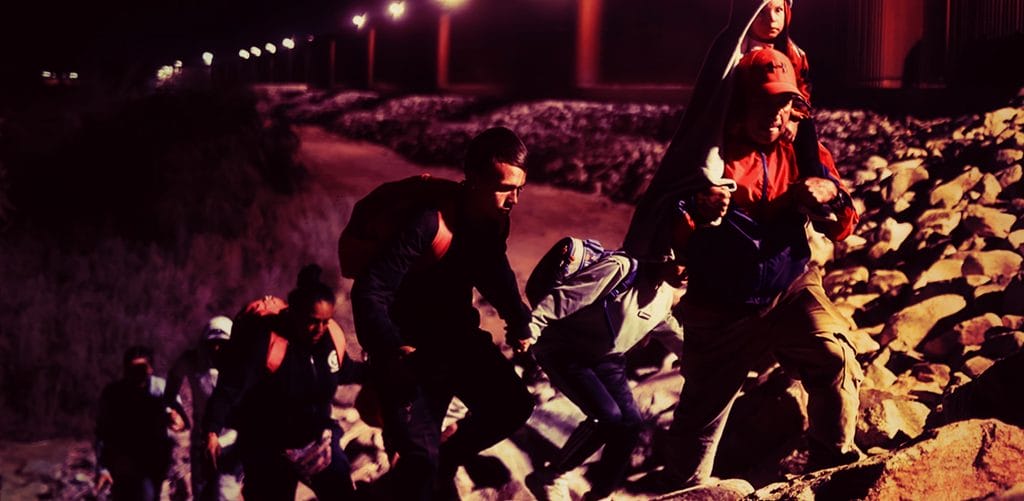
For many undocumented immigrants, simply going to work, applying for a new job, or dealing with government agencies could potentially expose their immigration status. The result was an underground existence in which people who might have lived in the United States for years remained reluctant to draw attention to themselves. Even the legalization program, intended to bring people out of the shadows, encountered an important obstacle—some eligible immigrants were afraid to apply because they were uncertain whether they qualified or feared the consequences of revealing themselves to the authorities. A 1988 Government Accountability Office review found that although the government had expected millions to apply, some potential applicants remained reluctant because of uncertainty about eligibility.
The January 1988 documentary also raises one of the central questions surrounding immigration: What actually happens to the American economy when undocumented workers are employed?
The argument that undocumented immigrants were taking jobs away from Americans had become a powerful part of the political debate. Yet the evidence was far more complicated than the slogan suggested. Government researchers acknowledged that there was limited evidence concerning the precise effects of unauthorized workers on American workers and wages. A 1986 GAO study found that the available research was limited, while subsequent government investigations continued examining whether undocumented workers depressed wages or damaged employment opportunities for legally authorized workers.
At the same time, undocumented workers were undeniably participating in the American economy. They were earning wages, buying goods and services, paying various taxes and contributing their labor to industries that depended upon a large, relatively inexpensive workforce. The economic question therefore could not easily be separated from the political one: America had created a labor system in which undocumented workers were officially outside the law while simultaneously becoming part of the everyday economic life of the country.
And at the center of that contradiction was the employer.
The 1986 law attempted to make employers the first line of enforcement. Rather than relying exclusively on immigration agents to find undocumented workers, the government placed a new responsibility on businesses: employers had to determine whether newly hired workers were legally authorized to work. The concept was straightforward. If the jobs disappeared, the incentive to enter the country illegally would presumably diminish.
In practice, however, enforcement proved considerably more complicated. The Government Accountability Office reported in 1987 that the new system was still in its early stages, with the government emphasizing education and warnings before moving toward stronger enforcement. Employers also faced a dilemma: if they became too aggressive in checking documents, they could discriminate against people who merely looked or sounded foreign. Congress had anticipated that problem and included anti-discrimination provisions in the law.
Thus, the immigration question of 1988 was not simply about people crossing a border. It was about work, law, economics, identity and politics—and the enormous gap between them.
The documentary’s picture of undocumented immigrants living cautiously and sometimes invisibly illustrates that gap particularly well. These were not necessarily people living outside American society; many were already working, raising families, paying rent, buying food and contributing to their communities. Their undocumented status could coexist with an otherwise remarkably ordinary existence.
The great question confronting America in 1988 was how to reconcile those realities with a legal system that increasingly demanded a clear distinction between those entitled to work and those who were not.
The Immigration Reform and Control Act was intended to draw that line. Instead, its early implementation demonstrated just how difficult that line could be to enforce—and how deeply immigration had already become woven into the economic and social fabric of American life.
Here is that episode of Newsmark “America’s New Immigration Law” – from CBS Radio News on January 10, 1988.