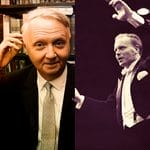
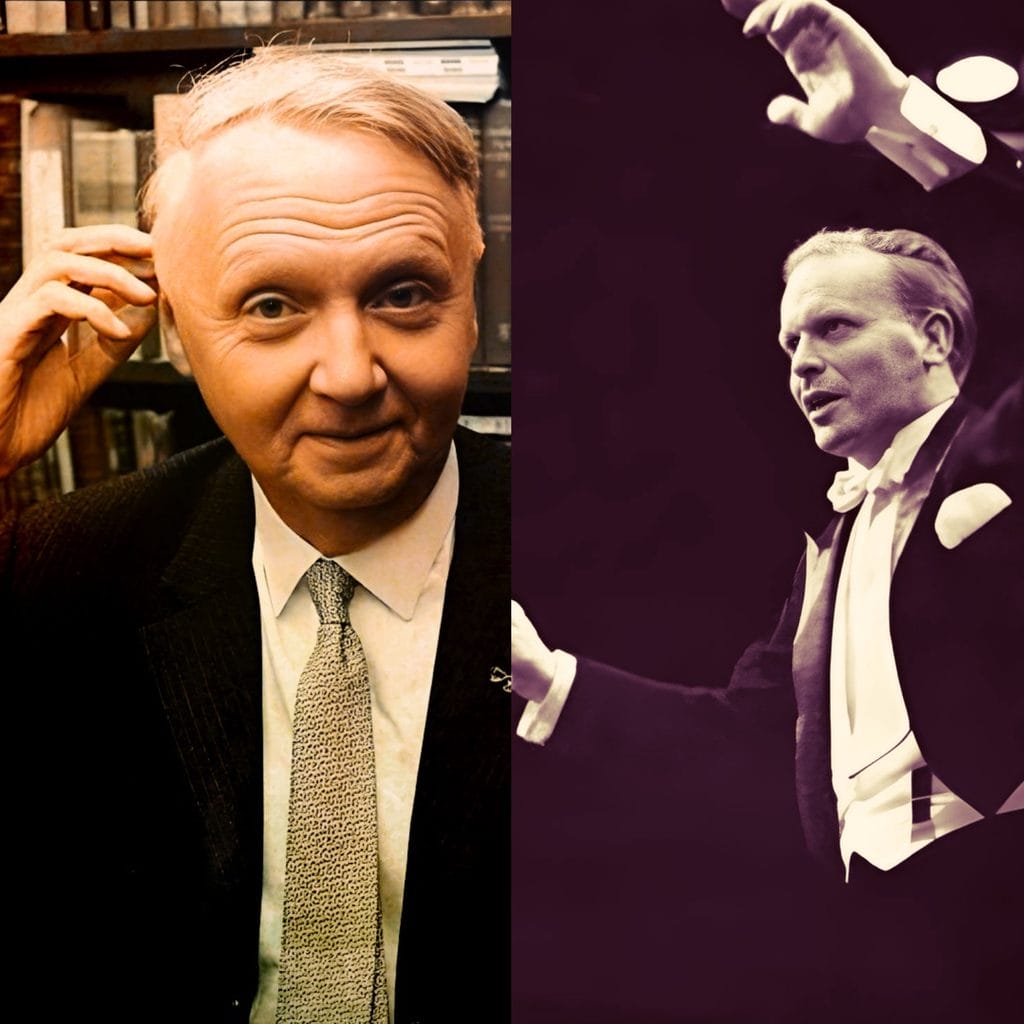
20th Century music from Holland this week – recorded on October 24, 1968, a performance of Symphony Number 2 by Hendrik Andrissen with the Radio Philharmonic of Radio Nederland conducted by Willem van Otterloo.
Hendrik Franciscus Andriessen was born on September 17, 1892, in the house at Bakenessergracht 26A in Haarlem. Hendrik came from a musical family. His father, Nico, was an organist and conductor at the St. Joseph Church in Haarlem, and his mother, Gezine Vester, was a gifted painter.
In May 1913, Hendrik Andriessen succeeded his deceased father Nico as organist of the St. Joseph Church. He received organ lessons from Louis Robert, the then city organist of Haarlem. In 1916, Andriessen obtained the final certificate for composition as his main subject at the Amsterdam Conservatory. There he met piano student Tine Anschütz, whom he married on August 12, 1919.
After twenty-one years of service, Andriessen decided it was time to exchange the St. Joseph Church for another workplace. In July 1934, he successfully applied for the position of conductor and organist of the St. Catherine Cathedral in Utrecht. Andriessen was not entirely unknown in the city; four years earlier, he had become an organ teacher at the Catholic Church Music School on the Plompetorengracht.
Things were going well for Andriessen in Utrecht. The Society for the Promotion of Music was looking for a new director for the local music school and conservatory, to succeed Jan van Gilse. They found an excellent candidate in Andriessen, and he was able to start on September 1, 1937. Andriessen became busy, for at that very moment he began as head teacher of theory and composition, and the pedagogy of those subjects, at the Amsterdam Conservatory.
Meanwhile, Andriessen was celebrating triumphs as a composer. His Variations and Fugue on a Theme by Kuhnau for string orchestra, completed in 1935 and better known as the Kuhnau Variations , were particularly frequently performed. Andriessen steadily continued to build upon his already impressive oeuvre. He expanded his catalog of church music with a number of masses and his famous Magnificat (1937). The premiere of the Ballade van den merel (1936) by the Rotterdam Philharmonic Orchestra under Eduard Flipse did not go unnoticed. The same applies to the first performance of the Second Symphony (1938) by the Concertgebouw Orchestra under Eduard van Beinum. And on April 20, 1940, just before the outbreak of war, violinist Thomas Magyar, cellist Piet Lentz, and pianist Cor de Groot premiered Andriessen’s Trio No. 2. A few days later, Paul F. Sanders spoke in Het Volk of “a mature piece of truly masterful allure, which must be regarded as a very important addition to trio literature”.
Hendrik Andriessen’s life took a completely new turn when he was appointed director of the Royal Conservatory in The Hague on May 1, 1949. This job was so demanding that he had to discontinue most of his other activities. He resigned from the conservatories of Utrecht and Amsterdam. He was also forced to give up his position as organist of the Utrecht Cathedral. Andriessen would not accept a new position as organist after that.
The Roman Catholic University of Nijmegen appointed Andriessen as extraordinary professor of musicology in 1952. On October 3, he delivered his inaugural address, entitled ‘Aspects of Dutch Music’. In it, he pointed out, among other things, the intense influence of music on people and society.
When he reached retirement age in 1957, Andriessen left the Royal Conservatory. On that occasion, he was appointed Knight in the Order of the Netherlands Lion. In the years that followed, he received various music prizes, including the Johan Wagenaar Foundation Prize (1958), the Kunstenaarsverzet Prize (1959), the Sweelinck Prize (1960), and the Professor Van der Leeuw Prize (1960).
In early July 1963, Andriessen retired as an extraordinary professor at the University of Nijmegen at the age of seventy. Tine Andriessen passed away on July 15, 1975. Andriessen himself died on Palm Sunday, April 12, 1981. Four days later, following a solemn requiem mass in the St. Joseph Church, he was buried next to his wife at Berkenrode Cemetery in Heemstede.
Enjoy.