
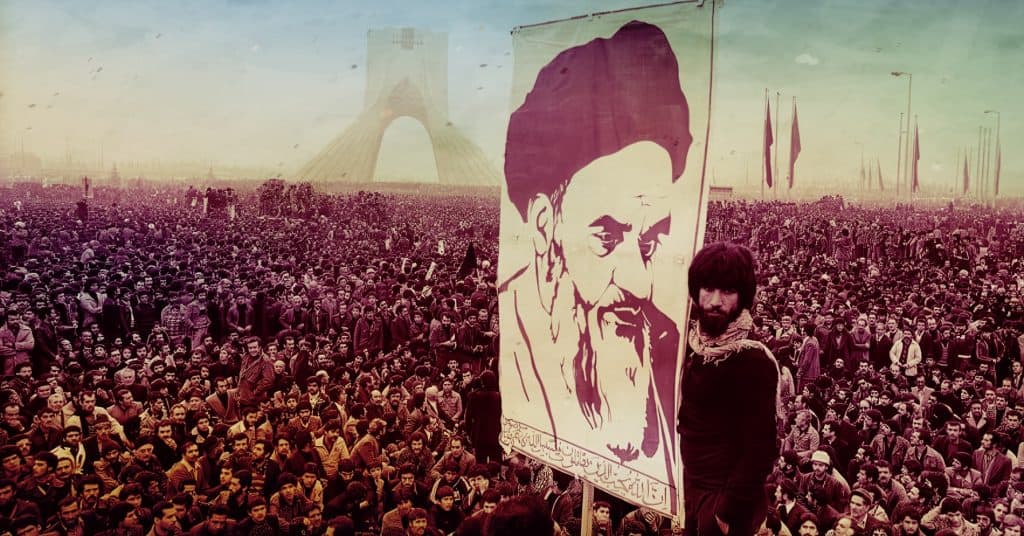
News for this day was full of implications for the future.
From Tehran – Tehran and several provincial centers shut down today in response to a general strike call by the shah’s chief opponent, Ayatollah Ruhollah Khomeini. Armed troops riding in army trucks patrolled Tehran and took positions on strategic street corners across the capital. But the heavy armor seen freqently in Tehran last week was not deployed when the strike began early today. All shops and businesses with the exception of small grocery stores, bakeries, and heating fuel retailers closed down. Major department stores and food d stores remained shut.
A spokesman for the National Front, Khomeini’s main ally among Iranian political parties, said no street demonstrations were planned for the day.
Meanwhile: The Organization of Petroleum Exporting Countries’ approval Sunday of the largest crude-oil price increase since the 1974-75 oil embargo caught 1-industry watchers off guard. And while most said the impact of the price boost would be moderated somewhat because it will be spread over the next 10 months, government officials said the increase could mean a significant jump in the rate of inflation. “We regret this OPEC decision and hope it will be reconsidered before the next steps, take effect,” the White House said in a statement. “This large price hike will programs to maintain world economic recovery and to reduce inflation.” “I can only say that I am shocked and very, very disappointed,” said Alfred Kahn, President Carter’s chief inflation fighter. “We thought we had reason to believe that they understood what an extremely harmful effect so large a price increase would have on us and on the world I think it will be terribly injurious to us and – in the long run, to them.”
And Four issues the United States describes as minor stand in the way of a peace treaty between Egypt and Israel. The Israelis regard them as sufficiently major to risk a confrontation with the United States, Israel’s chief ally and arms supplier. All four issues were last-minute proposals Secretary of State Cyrus R. Vance brought from Egypt last week in a move to get the treaty initialed by Sunday, the deadline set in the Camp David peace agreements signed Sept.17. The Cabinet rejected all four proposals Friday. At the same time it reaffirmed its desire to sign the draft treaty as approved Nov. 21 and charged the United States with siding with Egypt in the negotiations. The four proposals, according to the Cabinet, were: 1. A target date of December 1979 for implementation of self-governing councils in the West Bank and Gaza.
2. An exchange of ambassadors by Israel and Egypt only after the 450,000 Palestinians in Gaza govern themselves. 3. Amending Article 4 or the draft treaty to provide for a review of the security arrangements after five years. 4. Attaching a letter to Article 6 to ensure the treaty would not take priority over Egypt’s obligations to its Arab sister states. The Cabinet’s rejection of these proposals are not negotiable, Israeli sources said. The Israeli view of each proposal might provide a better understanding as to why the Cabinet rejected the package.
And that’s just a small slice of what happened, this December 18, 1978 as reported by The CBS World News Roundup.
And we’re still looking for a few good dollars: