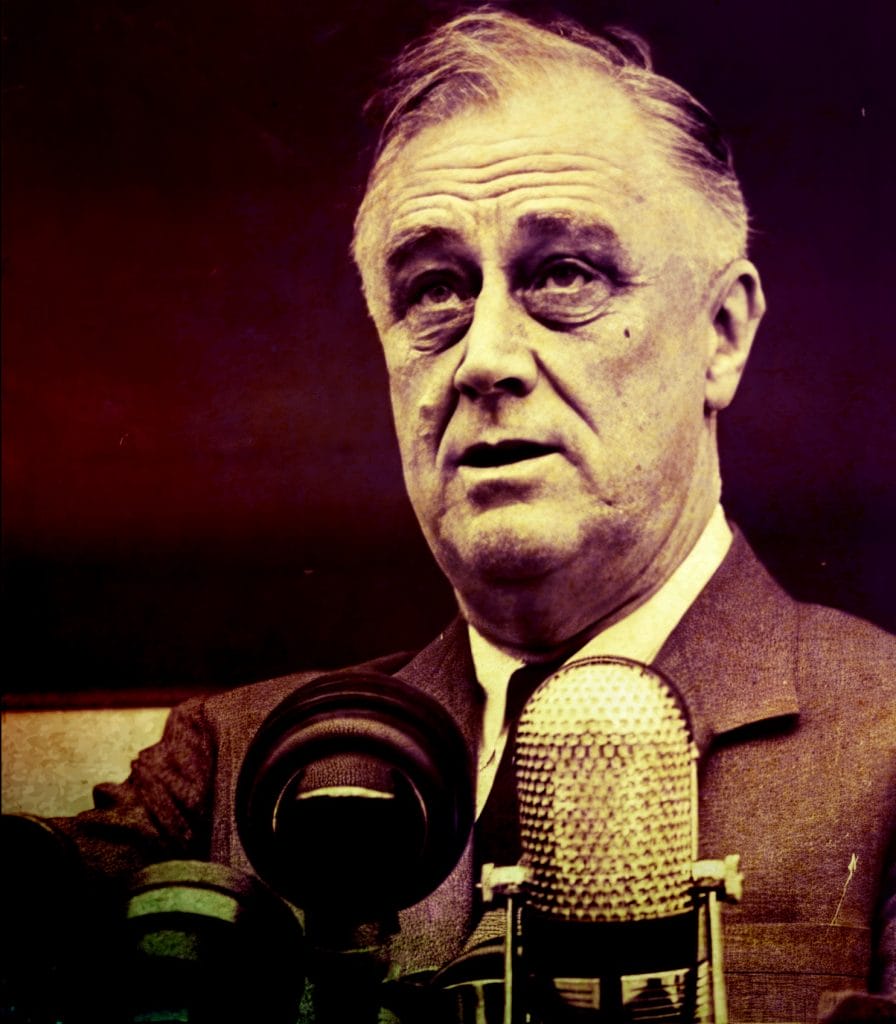
In the name of a grateful nation “paying a debt long overdue,” FDR dedicated a great marble shrine to Thomas Jefferson and declared that present day Americans, like the champion of freedom, have faced the fact that “men who will not fight for liberty can lose it”.
“He loved peace and loved occasion was forced to choose liberty–yet yet on than one between them,” President Roosevelt said of Jefferson. “We, too, have been compelled to make that choice.” The President spoke to an outdoor crowd of several thousand the memorial built persons gathered at then fontade ground in Potomac Park’s tidal basin.
In commemorating the two hundredth anniversary of Jefferson’s birth, Roosevelt said the author of the Declaration of Independence proved that the “seeming eclipse of liberty can well become the dawn of more liberty. Those who fight the tyranny of our own time will come to learn that old lesson”. “Among all the peoples of the earth,” he continued, “the cruelties and oppressions of its would be masters have taught this generation what its liberties can mean. This lesson, SO bitterly learned, will never be forgotten while this generation is still alive.”
The President drew several parallels between the fight for freedom made by the third President and the battles of today to preserve that freedom. “Thomas Jefferson,’ he said, “believed, as we believe, in man. He believed, as we believe, that men are capable of their own government, and that no king, no tyrant, no dictator can govern for them as wisely as they can govern for themselves.” The memorial temple, which the President said he was dedicating as a shrine to freedom in a great war for freedom, cost $3,000,000. It is a circular structure built in modification of the Pantheon at Rome, with twentysix Ionic columns topped with a huge white dome. Inside between two American flags stands a nineteen-foot plaster statue of the philosopher of Monticello which will be done in bronze after the war.
The 176- foot high memorial can seen from the south portico the bet White House, which forms the northern point of the city’s now completed architectural diamond. The 555-foot Washington Monument is in the center, the Jefferson Memorial on the south, the Capitol on the east and the Lincoln Memorial on the west.
President Roosevelt: Today, in the midst of a great war for freedom, we dedicate a shrine to freedom.
To Thomas Jefferson, Apostle of Freedom, we are paying a debt long overdue.
Yet, there are reasons for gratitude that this occasion falls within our time; for our generation of Americans can understand much in Jefferson’s life which intervening generations could not see as well as we.
He faced the fact that men who will not fight for liberty can lose it. We, too, have faced that fact.
He lived in a world in which freedom of conscience and freedom of mind were battles still to be fought through—not principles already accepted of all men. We, too, have lived in such a world.
He loved peace and loved liberty—yet on more than one occasion he was forced to choose between them. We, too, have been compelled to make that choice.
Generations which understand each other across the distances of history are the generations united by a common experience and a common cause. Jefferson, across a hundred and fifty years of time, is closer by much to living men than many of our leaders of the years between. His cause was a cause to which we also are committed, not by our words alone but by our sacrifice.
For faith and ideals imply renunciations. Spiritual advancement throughout all our history has called for temporal sacrifices.
The Declaration of Independence and the very purposes of the American Revolution itself, while seeking freedoms, called for the abandonment of privileges.
Jefferson was no dreamer-for half a century he led his State and his Nation in fact and in deed. I like to think that this was so because he thought in terms of the morrow as well as the day—and this was why he was hated or feared by those who thought in terms of the day and the yesterday.
We judge him by the application of his philosophy to the circumstances of his life. But in such applying we come to understand that his life was given for those deeper values that persist throughout all time.
Leader in the philosophy of government, in education, in the arts, in efforts to lighten the toil of mankind—exponent of planning for the future, he led the steps of America into the path of the permanent integrity of the Republic.
Thomas Jefferson believed, as we believe, in Man. He believed, as we believe, that men are capable of their own government, and that no king, no tyrant, no dictator can govern for them as well as they can govern for themselves.
He believed, as we believe, in certain inalienable rights. He, as we, saw those principles and freedoms challenged. He fought for them, as we fight for them.
He proved that the seeming eclipse of liberty can well become the dawn of more liberty. Those who fight the tyranny of our own time will come to learn that old lesson. Among all the peoples of the earth, the cruelties and the oppressions of its would-be masters have taught this generation what its liberties can mean. This lesson, so bitterly learned, will never be forgotten while this generation is still alive.
The words which we have chosen for this Memorial speak Jefferson’s noblest and most urgent meaning; and we are proud indeed to understand it and share it:
“I have sworn upon the altar of God, eternal hostility against every form of tyranny over the mind of man.”
Here is President Roosevelt’s address.