In May of 1943, with the outcome of the Second World War still uncertain, political thinkers and commentators were already debating the shape of the postwar world. Programs such as the university discussion series Northwestern Reviewing Stand reflected a growing awareness that military victory alone would not guarantee lasting peace. The central question facing policymakers and intellectuals was whether genuine unity among nations could survive once the common enemy of Nazi Germany and Imperial Japan had been defeated. Two years before the formal creation of the United Nations, the idea of international cooperation was already being tested against deep political, ideological, and colonial divisions.
The wartime alliance itself was an uneasy partnership. The United States, Great Britain, and the Soviet Union were united by necessity rather than shared philosophy. Americans in 1943 understood that democracy and Soviet Communism represented profoundly different political systems. While wartime propaganda emphasized Allied solidarity, many observers feared that ideological disagreements would reappear once the pressure of war had lifted. Questions surrounding freedom of speech, private enterprise, and political representation contrasted sharply with the Soviet model of centralized control and one-party rule. Even while American and Soviet soldiers fought on the same side, commentators recognized that future tensions were almost inevitable.
One of the most troubling examples involved Poland and Eastern Europe. Poland had already become a symbol of international distrust after the Soviet Union’s earlier occupation of eastern Polish territory in 1939. By 1943, disputes over borders and political control were resurfacing. The discovery of the Katyn Forest massacre in the spring of that year intensified suspicions between the Polish government-in-exile and Moscow. Many feared that Soviet ambitions in Eastern Europe would continue after the war ended, raising concerns about whether smaller nations would truly enjoy independence in the new international order. If the great powers could not agree on the future of Poland, critics wondered how any worldwide peace organization could function effectively.
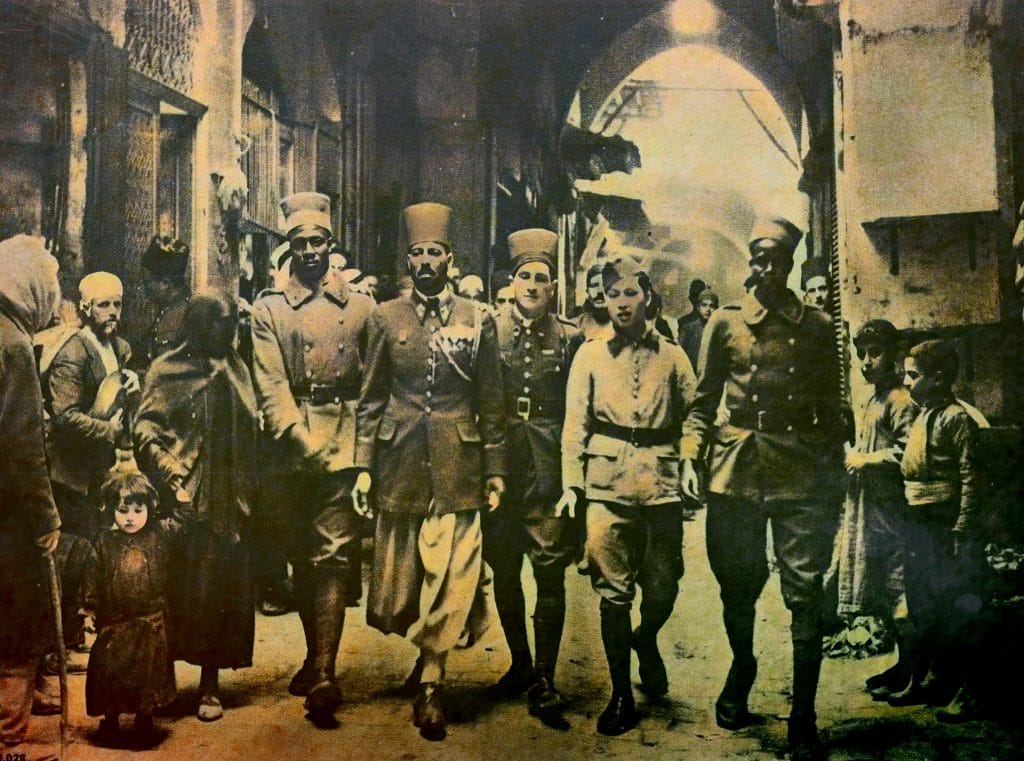
Another major issue discussed during this period was the future of imperialism and colonial rule. The war had weakened the authority of the old European empires, particularly Britain, France, and the Netherlands. Millions of colonial troops and laborers had contributed to the Allied war effort, and demands for self-government were growing rapidly across Asia, Africa, and the Middle East. American rhetoric about freedom and democracy often conflicted with the reality that many Allied nations still controlled vast colonial possessions.
For some observers, the end of the war seemed likely to trigger a worldwide movement toward independence. Nations such as India, Burma, Indonesia, and numerous African territories were increasingly unwilling to accept foreign rule indefinitely. Yet this raised difficult questions for any future international organization. Would the postwar world truly support national self-determination, or would colonial powers attempt to preserve their empires under new political arrangements? Critics feared that unresolved colonial grievances could produce new wars and revolutions even if fascism were defeated.
Underlying all these debates was the memory of the failure of the League of Nations after the First World War. Many participants in discussions like Northwestern Reviewing Stand understood that the League had collapsed partly because the major powers lacked unity and commitment. By 1943, there was widespread agreement that any future international body would need stronger cooperation among the great powers if it were to survive. But there was also skepticism about whether such unity was realistic once wartime necessity disappeared.
The phrase “United Nations” itself, already in use during the war, carried both hope and uncertainty. It suggested a world in which nations could settle disputes peacefully and cooperate economically and politically. Yet beneath that idealism lay unresolved conflicts involving territory, ideology, race, empire, and national ambition. The very issues that had contributed to earlier wars had not disappeared; in many ways, they had merely been postponed until victory was achieved.
Looking back, the concerns voiced in 1943 proved remarkably prophetic. Within only a few years of the war’s end, disagreements between the Soviet Union and the Western democracies hardened into the Cold War. Colonial empires rapidly unraveled, often through violent struggles for independence. Debates over national sovereignty, ideological conflict, and the rights of smaller nations became defining issues of the postwar era.
Nevertheless, the eventual creation of the United Nations in 1945 represented an important attempt to prevent another global catastrophe. Even if complete unity proved impossible, the discussions of 1943 demonstrated a growing recognition that the world’s nations could no longer survive in isolation. The challenge was not merely winning the war, but building a peace durable enough to withstand the political and ideological divisions certain to follow.
Here is an episode of The Northwestern Reviewing Stand from May 23, 1943 from the Mutual Network.