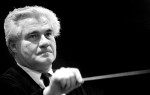
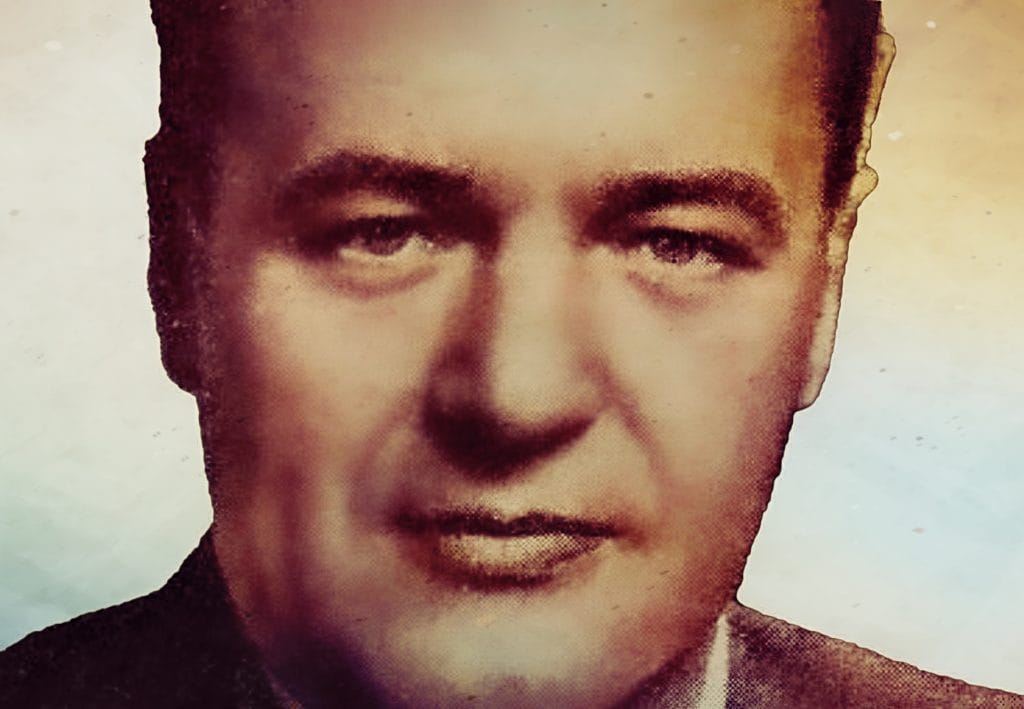
Back to the archives of Swiss Radio this week for a “Composer conducts” performance by Swiss composer/conductor/educator Albert Jenny in a radio broaadcast of his Serenade For Orchestra from 1962 – recorded at Studio 1 of Basel Radio on March 19, 1963 with Albert Jenny leading the Radio-Orchestra Beromünster.
Albert Jenny was a Swiss composer , church musician , choirmaster , conductor , and music educator . His main places of activity were in Lucerne and Solothurn. His compositional output includes sacred and secular choral music, solo vocal works, instrumental music, stage music, and music for festivals.
Musicologist Max Lütolf describes Albert Jenny as a composer who was not concerned with “modernity at any price” and who was familiar with compositional techniques such as seriality , polytonality , and the layering of equal intervals. However, “critical experimentation” led to these techniques playing a subordinate role in his acclaimed work.
Musicologist Alois Koch says: “As a composer, conductor, choirmaster, and lecturer, Albert Jenny (1912–1992) was an important figure of lasting significance for Central Switzerland in the period around and after Johann Baptist Hilber. While his major oratorios ( To the Unknown God , The Song of Creation , The Great Circle ) are hardly known today, his contributions to sacred music, created in the context of the liturgical and aesthetic upheaval of the Second Vatican Council , still document the artistic redefinitions undertaken at that time.”
Angelo Garovi points out that, thanks to the Lucerne International Music Festival, there has been an open-minded, undogmatic circle of composers since the 1950s, which also included Albert Jenny. He considers Albert Jenny’s oratorio Dem unbekannten Gott (To the Unknown God), first performed in 1956 , to a text by Herbert Meier, alongside Arthur Honegger’s scenic oratorio Nicolas de Flue and works by other composers, to be among the important music-dramatic works of 20th-century Switzerland, which are part of a tradition of oratorio choral culture dating back to the 19th century.
Sit back and enjoy.