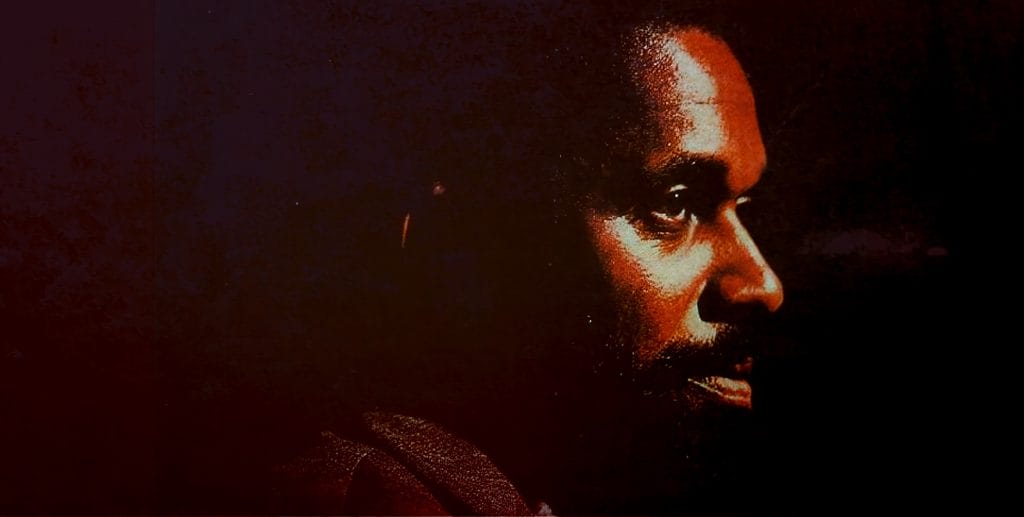
John Lewis Trio – live at Town Hall – Lenox, Massachusetts – July 13, 1996.
Perennial favorite John Lewis this weekend – along with Marc Johnson, bass and Albert “Tootie” Heath on drums, in concert at Town Hall in Lenox Massachusetts on July 13, 1996.
Probably best known as one of the founders and guiding lights of The Modern Jazz Quartet, John Lewis also had a wide-ranging and celebrated career as soloist and composer; an active proponent of Third Stream Music as well as offering stellar arrangements of the music of Bach.
His list of collaborations reads like a who’s who in contemporary music and his influence has spread out over many generations of musicians and continues, some 25 years after his death.
Leonard Feather’s opinion of Lewis’s work is representative of many other knowledgeable jazz listeners and critics: “Completely self-sufficient and self-confident, he knows exactly what he wants from his musicians, his writing and his career and he achieves it with an unusual quiet firmness of manner, coupled with modesty and a complete indifference to critical reaction.” Lewis was not only this way with his music, but his personality exemplified these same qualities.
Lewis, who was significantly influenced by the arranging style and carriage of Count Basie, played with a tone quality that made listeners and critics feel as though every note was deliberate. Schuller remembered of Lewis at his memorial service that “he had a deep concern for every detail, every nuance in the essentials of music”. Lewis became associated with representing a modernized Basie style, exceptionally skilled at creating music that was spacious, powerful and yet, refined. In an interview with Metronome magazine, Lewis himself said:
My ideals stem from what led to and became Count Basie’s band of the ’30s and ’40s. This group produced an integration of ensemble playing which projected—and sounded like—the spontaneous playing of ideas which were the personal expression of each member of the band rather than the arrangers or composers. This band had some of the greatest jazz soloists exchanging and improvising ideas with and counter to the ensemble and the rhythm section, the whole permeated with the fold-blues element developed to a most exciting degree. I don’t think it is possible to plan or make that kind of thing happen. It is a natural product and all we can do is reach and strive for it.
It is considered, however, that Lewis was successful in exemplifying, in his arrangements and compositions, this skill that he admired. Because of his classical training, in addition to his exposure to bebop, Lewis was able to combine the two disparate musical styles and refine jazz so that there was a “sheathing of bop’s pointed anger in exchange for concert hall respectability”.
Lewis was also influenced by the improvisations of Lester Young on the saxophone. Lewis had not been the first jazz pianist to be influenced by a horn player. Earl Hines in his early years looked to Louis Armstrong‘s improvisations for inspiration and Bud Powell looked to Charlie Parker. Lewis also claims to have been influenced by Hines himself.
Lewis was also heavily influenced by European classical music. Many of his compositions for the MJQ and his own personal compositions incorporated various classically European techniques such as fugue and counterpoint,[37] and the instrumentation he chose for his pieces, sometimes including a string orchestra.
In the early 1980s, Lewis’s influence came from the pianists he enjoyed listening to: Art Tatum, Hank Jones and Oscar Peterson.
Press Play and dive in – it’s the weekend, after all.