When the BBC World Service broadcast Children of the Revolution in two parts on April 7, 2010, it offered a remarkable portrait of a generation that had grown up knowing no other Iran than the Islamic Republic. The young people interviewed for the documentary were not participants in the 1979 Revolution. They were its children and grandchildren. Yet they were living with the consequences of a political and religious revolution that had taken place before most of them were born.
More than three decades after Ayatollah Ruhollah Khomeini and the Islamic revolutionaries came to power, Iran was a country of young people. The documentary emphasized just how large a proportion of the population was under thirty, creating what was then an extraordinary demographic and political fact: the future of the Islamic Republic was increasingly in the hands of people who had never experienced the society that existed before it.
And many of them were not particularly interested in living according to the rules imposed upon them.
The Iran described by the BBC’s young interviewees was a place of contradictions. The state attempted to regulate clothing, relationships, entertainment, music, political expression and access to information. Public behavior was expected to conform to the principles of the Islamic Republic. But private life was another matter. Young Iranians had discovered ways of creating their own culture inside — and sometimes just outside — the boundaries established by the authorities.
Western music, satellite television, films, the internet and increasingly sophisticated forms of digital communication opened windows onto a world considerably larger than the one officially sanctioned by the government. Young people found ways to listen to music that was discouraged, watch films that were restricted, socialize in ways that would have been unacceptable in public and communicate with one another beyond the reach of the traditional institutions of authority.
This was not necessarily open revolution. Often it was something quieter and, in its own way, more revealing: accommodation, improvisation and resistance through everyday life.
The students and young adults interviewed in Children of the Revolution understood the risks of confronting the state directly. Iran had already experienced the massive demonstrations surrounding the disputed 2009 presidential election. The Green Movement had demonstrated that a new generation was willing to challenge the political establishment, but it had also demonstrated the price of doing so. The government responded with arrests, violence and repression.
The remarkable thing was that repression did not necessarily produce obedience. Instead, it often encouraged young Iranians to become more creative about finding spaces in which they could exercise some control over their own lives.
That distinction is important. Youth culture can change a society without immediately changing its government. A young woman deciding how she will dress, students choosing what music they will listen to, friends communicating through forbidden or restricted technologies, or young people quietly questioning religious and political authority may appear insignificant individually. Collectively, however, such behavior can change the social boundaries of a country.
In 2010, some observers were even suggesting that the sheer weight of Iran’s youthful population might make it difficult for the regime to survive much beyond the middle of the decade. That prediction proved premature. The Islamic Republic survived 2015 — and continues to survive. But the underlying generational conflict did not disappear.
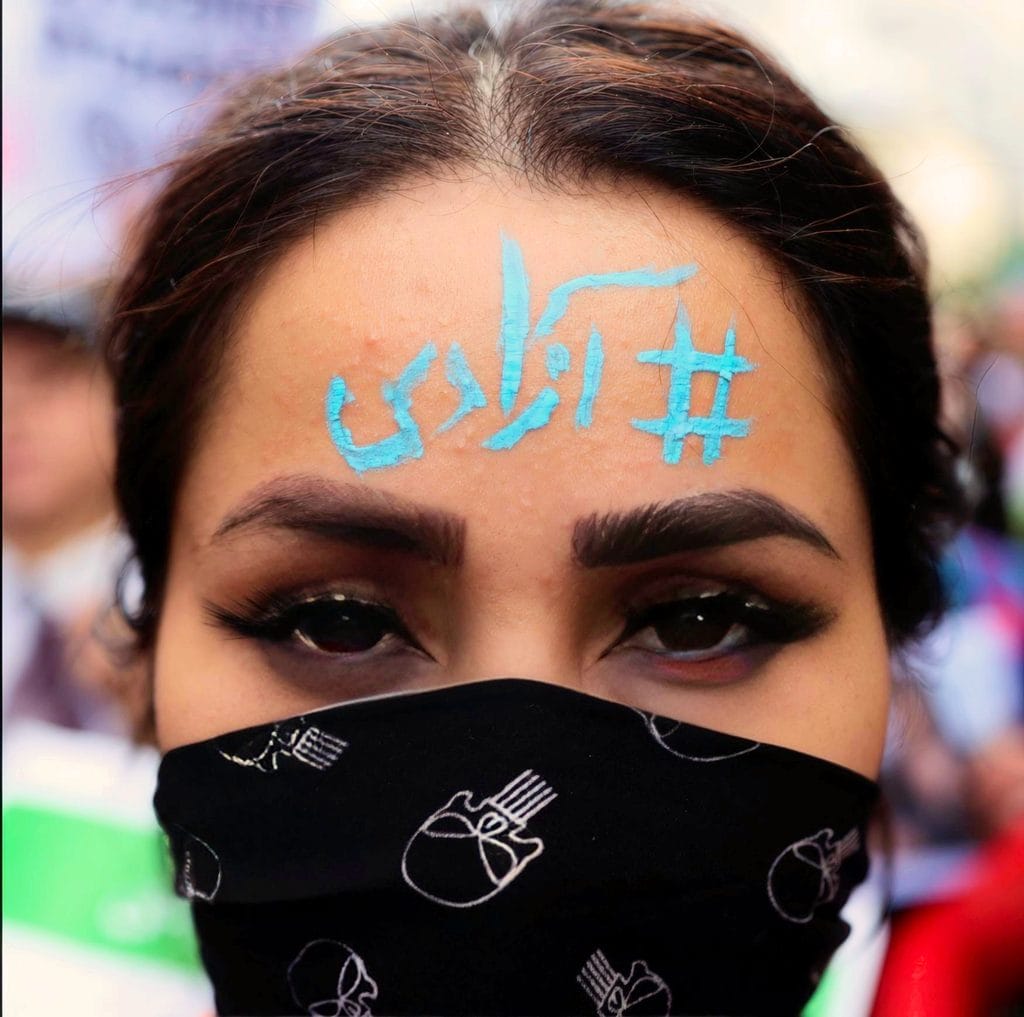
Indeed, events since the BBC documentary suggest that the young people it interviewed were part of a much longer story. The 2022 Woman, Life, Freedom movement, sparked by the death of 22-year-old Jina Mahsa Amini in custody after her arrest over compulsory veiling, brought a younger generation into the streets on a scale that represented one of the most serious challenges to the Islamic Republic since 1979.
What is especially striking is that the struggle did not end when the demonstrations were suppressed. Research examining Iranian social behavior found that women appearing without the mandatory head covering increased substantially after the 2022 protests and that this change persisted even though the law itself remained in place. In other words, the government could maintain the rule while losing some of its practical authority over everyday behavior.
By 2026, Iran’s political system remains firmly in place, but the question raised by Children of the Revolution has become even more interesting. The issue was never simply whether young Iranians could overthrow the government by a particular date. It was whether a government could indefinitely maintain control over a society whose younger generations increasingly possessed different expectations about freedom, culture, gender and personal choice.
The answer so far appears to be complicated. The regime has demonstrated an extraordinary capacity to repress and survive. But survival is not necessarily the same thing as winning the cultural argument.
The young people interviewed by the BBC in 2010 were learning how to live around the system. The generations that followed them have gone further, challenging some of its most fundamental assumptions in the streets, online and through the ordinary choices of everyday life. The revolution of 1979 created the Islamic Republic. But the children of that revolution have spent decades quietly creating a different kind of revolution — one measured not only in demonstrations and political slogans, but in the gradual insistence that they should be allowed to determine what it means to be young, Iranian and free.
Here is that documentary.