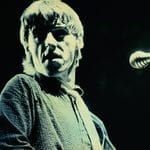
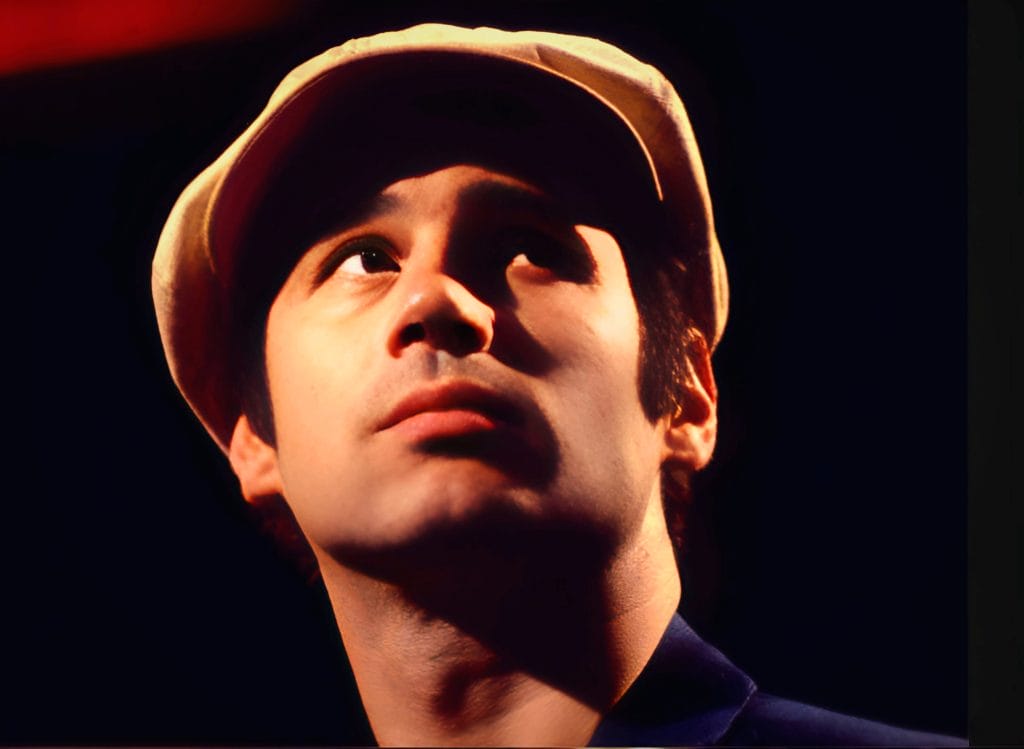
Something a bit different tonight – a concert by Neil Innes, recorded at The Abbey Pub in Chicago on October 21, 2004.
Neil Innes first came to prominence in the comedy rock group the Bonzo Dog Doo-Dah Band and later became a frequent collaborator with the Monty Python troupe on their BBC television series and films, and is often called the “seventh Python” along with performer Carol Cleveland. Along with Eric Idle of Monty Python, he co-created the Rutles, a Beatles parody/pastiche project; Innes wrote the band’s songs. He also wrote and voiced the 1980s ITV children’s cartoon adventures of The Raggy Dolls.
Innes joined a semi-professional college band originally called the Bonzo Dog Dada Band (after Bonzo the dog, an illustrated cartoon character from the 1920s, and the art movement Dada), which was later renamed the Bonzo Dog Doo-Dah Band after the group tired of constantly explaining the concept of Dada to confused onlookers (and later still the band name was officially shortened to the Bonzo Dog Band). At this point the band, which then had a revolving membership of anything up to a dozen players at a time, largely performed a dada-influenced, deliberately shambolic, comedic repertoire of trad-jazz cover versions at local public houses and college events, to the delight and occasional bemusement of audiences.
Innes had met the band’s co-founders Vivian Stanshall and Rodney Slater some time earlier when they and bandmate “Legs” Larry Smith were studying at the Central School of Art, but Innes’ official entry into the band was actually facilitated by his then-landlord and college tutor, Vernon Dudley Bohay Nowell, who happened to be the band’s bass guitarist at the time. Innes’ induction into the band proved to be fundamental to their eventual success when he brought a more focused and disciplined musical direction to their efforts, with his talents as a composer, arranger and multi-instrumentalist. At the band’s creative peak in 1968 and 1969, Innes, alone and together with Stanshall, composed most of the band’s original material, including his solo composition (and sole Bonzos hit) “I’m the Urban Spaceman“,[5] (produced by Apollo C. Vermouth, a collective alias for Paul McCartney and Gus Dudgeon), and “Death Cab for Cutie” (with lyrics by Stanshall), which featured in the Beatles‘ film Magical Mystery Tour (1967). Innes won an Ivor Novello Award for Best Novel(ty) Song in 1968 for “I’m the Urban Spaceman”.
During the same creatively fertile 1968/69 period, Innes and the Bonzo Dog Band also appeared each week in both seasons of the British children’s television series Do Not Adjust Your Set which also featured future Monty Python members Eric Idle, Terry Jones, Michael Palin and Terry Gilliam. Although initially intended to appeal solely to children, the show’s surreal and absurdist nature soon also attracted a large adult following.
In the mid-1970s Innes became closely associated with the Monty Python team, having first worked with Michael Palin, Terry Jones and Eric Idle on the 1960s television show Do Not Adjust Your Set. He contributed music to the Monty Python albums Monty Python’s Previous Record (1972) and The Monty Python Matching Tie and Handkerchief (1973), and played a major role in performing and writing songs and sketches for their final TV series in 1974, after John Cleese temporarily left the troupe. He wrote a squib of a song called “George III” for the episode “The Golden Age of Ballooning”, which was sung by the Flirtations but billed onscreen as the Ronettes. He also wrote the song “When Does a Dream Begin?”, used in “Anything Goes: The Light Entertainment War”. He co-wrote the “Most Awful Family in Britain” sketch and played a humorous stilted guitar version of the theme song, “The Liberty Bell” march, during the credits of the last episode, “Party Political Broadcast”. He is one of only two non-Pythons ever to be credited writers for the TV series, the other being Douglas Adams (who co-wrote the “Patient Abuse” sketch, also featured in “Party Political Broadcast”).
He appeared on stage with the Pythons in the UK and Canada in 1973, in London in 1974 and in New York City in 1976, performing the Bob Dylanesque “Protest Song” (complete with harmonica) on the album Monty Python Live at City Center. He was introduced as Raymond Scum. After his introduction he told the audience, “I’ve suffered for my music. Now it’s your turn.” In 1980, he travelled to the States with the Pythons again, subsequently appearing in Monty Python Live at the Hollywood Bowl. He performed the songs “How Sweet to Be an Idiot” and “I’m the Urban Spaceman“. He also appeared as one of the singing “Bruces” in the Philosopher Sketch and as a Church Policeman in the “Salvation Fuzz” sketch.
Innes wrote original songs for the film Monty Python and the Holy Grail (1975), such as “Knights of the Round Table” and “Brave Sir Robin”. He appeared in the film as a head-bashing monk, the serf crushed by the giant wooden rabbit, and the leader of Sir Robin’s minstrels. He also had small roles in Terry Gilliam‘s Jabberwocky (1977) and Monty Python’s Life of Brian (1979), and performed the whistling on the latter’s hit song, “Always Look on the Bright Side of Life“. His collaborations with Monty Python and other artists were documented in the musical film The Seventh Python (2008), which premiered at the Mods & Rockers Film Festival on 26 June 2008.
Okay – an abbreviated background, but enough to give you an idea and motivation to press Play and enjoy the remainder of the weekend.