The 1950s – the world in a careful, and sometimes precarious balancing act between all-out nuclear war and shaky peace. All Western eyes were on the Soviet Union and what crisis was developing where, and in 1957 with the launch of Sputnik, the Soviet Union was standing in the Space Race.
As a counter-balance to the threat of Soviet influence and rising tensions of East-West tensions in the world, particularly Europe, an alliance was formed between Western Nations that went under the initials NATO (North Atlantic Treaty Organization).
Founded in the aftermath of World War II, NATO was established with the signing of the North Atlantic Treaty in 1949. The organization serves as a system of collective security, whereby its independent member states agree to mutual defense in response to an attack by any external party. This is enshrined in Article 5 of the treaty, which states that an armed attack against one member shall be considered an attack against them all.
Throughout the Cold War, NATO’s primary purpose was to deter and counter the threat posed by the Soviet Union and its satellite states, which formed the rival Warsaw Pact in 1955.
By 1957 the world was already deep in conflicts, tensions and skirmishes. And even though NATO as a military body wasn’t directly involved, there was enough going on that dragging it into a military intervention was looking more plausible every day, particularly in the Middle-East.
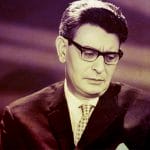
Secretary General of NATO at the time was Belgian political figure Paul-Henri Spaak. In 1956, Spaak was chosen by the Council of NATO to succeed Lord Ismay as secretary general. He held this office from 1957 until 1961, when he was succeeded by Dirk Stikker. He feuded constantly with French president Charles de Gaulle. He publicly attacked de Gaulle, blaming him for unjustly and unwisely blocking NATO’s progress and stalling efforts toward European and Atlantic integration. De Gaulle was uncompromising on issues related to national sovereignty, mistrusted the United States and considered Britain to be an American puppet; he insisted on developing French nuclear capabilities. Although Spaak used every diplomatic method at his disposal, his opinion mattered little to the main players in NATO.[30] When, in 1962, France, under de Gaulle, attempted to block both British entry to the European Communities and undermine their supranational foundation with the Fouchet Plan, Spaak working with Joseph Luns of the Netherlands rebuffed the idea. He was a staunch defender of the independence of the European Commission. “Europe of tomorrow must be a supranational Europe,” he declared. In honor of his work for Europe, the first building of the European Parliament in Brussels was named after him. When France withdrew from an active role in NATO in 1966, he was instrumental in the selection of Brussels as the new headquarters.
As part of its ongoing series of programs in the Public Interest, NBC’s series Youth Wants To Know features a question and answer session with Paul-Henri Spaak during it’s broadcast of October 27, 1957. The High School Journalism majors ask pertinent (and potentially thorny) questions regarding the role of NATO in world affairs and get an assessment from Paul Henri-Spaak on where these potential crises were leading.
An interesting half-hour – doubly interesting when you realize the ones asking the touch questions are between 16 and 17.
We thought about different things in a different way then.