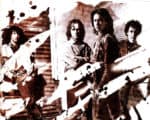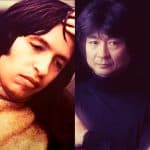
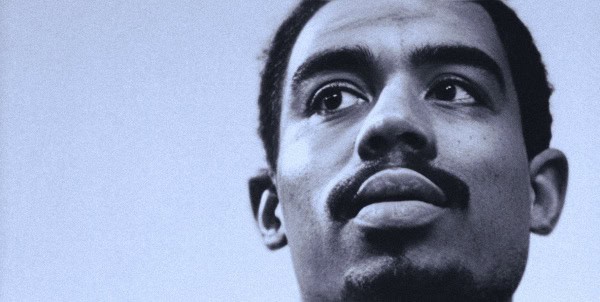
The immortal Eric Dolphy this weekend in a recently remastered broadcast from the Concepts In Jazz series from The Gaslight Inn on October 67, 1962. He’s joined by Eddie Armour on trumpet, Herbie Hancock on piano, Richard Davis on bass, Edgar Bateman on drums and vocals (the last two tracks) by Joe Carroll.
Primarily an alto saxophonist, bass clarinetist, and flautist, Eric Dolphy was one of several multi-instrumentalists to gain prominence during the same era. His use of the bass clarinet helped to establish the unconventional instrument within jazz. Eric Dolphy extended the vocabulary and boundaries of the alto saxophone, and was among the earliest significant jazz flute soloists.
His improvisational style was characterized by the use of wide intervals, in addition to employing an array of extended techniques to emulate the sounds of human voices and animals. He used melodic lines that were “angular, zigzagging from interval to interval, taking hairpin turns at unexpected junctures, making dramatic leaps from the lower to the upper register.” Although Eric Dolphy’s work is sometimes classified as free jazz, his compositions and solos were often rooted in conventional (if highly abstracted) tonal bebop harmony.
Eric Dolphy had his big break when he was invited to join Chico Hamilton’s quintet in 1958. With the group he became known to a wider audience and was able to tour extensively through 1958–59, when he left Hamilton’s group and moved to New York City. Eric Dolphy appears on flute with Hamilton’s band in the film Jazz on a Summer’s Day, documenting a performance at the 1958 Newport Jazz Festival.
John Coltrane acknowledged Eric Dolphy’s influence in a 1962 DownBeat interview, stating: “After he sat in… We began to play some of the things we had only talked about before. Since he’s been in the band, he’s had a broadening effect on us. There are a lot of things we try now that we never tried before. This helped me… We’re playing things that are freer than before.” Coltrane biographer Eric Nisenson stated: “Dolphy’s effect on Coltrane ran deep. Coltrane’s solos became far more adventurous, using musical concepts that without the chemistry of Eric Dolphy’s advanced style he might have kept away from the ears of his public.” In his book Free Jazz, Ekkehard Jost provided specific examples of how Coltrane’s playing began to change during the time he spent with Dolphy, noting that Coltrane started using wider melodic intervals like sixths and sevenths, and began focusing on integrating sound coloration and multiphonics into his solos. Jost contrasted Coltrane’s solo on “India”, recorded in November 1961 while Dolphy was with the group, and released on Impressions, with his solo on “My Favorite Things”, recorded roughly a year earlier, and released on the Atlantic album, and observed that on “My Favorite Things”, Coltrane “accepted the mode as more or less binding, occasionally aiming away from it… at tones foreign to the scale,” whereas on “India”, Coltrane, like Dolphy, played “around the mode more than in it.”
Dive in – the vibe is refreshing.