Along with the major upheavals taking place in American (and indeed, the world) society during the 1960s, one of the most striking was the rise in Student protest and student rebellion in general in every community across America.
Prior to this time there were rules in place – not only rules for conduct but rules for appearance (yes, even how you looked was a big part of the Student experience in the 1960s).
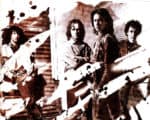
Since everything was subject to one form of demonstration or another, schools were in a quandary over how to exercise those rules as Popular Culture became a predominate bellwether of change in Society. Hair on boys was a very big issue – since the era of The Beatles it became almost a rite of passage for most boys to start growing their hair. Initially, this was met with instant suspension and a visit to the nearest Barber, even for hair touching a shirt collar or covering the tip of an ear. For Girls it wasn’t a question of hair as much as it was a question over length of skirt. Since girls weren’t allowed to wear pants of any kind (jeans were out – as they were for boys), the length of a skirt became of prime importance – especially since the Mini Skirt was something of a fashion revolution throughout the world in the mid-1960s. It was a rule skirts were to be no shorter than 2 inches above the knee – girls whose skirts were in question were subject to the ruler test – kneeling on a chair with usually the Girl’s vice Principal holding a ruler between the bottom of the skirt and the surface of the chair. If the skirt didn’t reach as far as the chair, it was usually met with a suspension from school or until a skirt with the approved length was worn.
It made for creative workarounds – boys became masters in the use of Vitalis (a rather greasy hair product that allowed you to style your hair to look like a Teen idol of the 50s) and Girls became Queens of deception (pulling skirts down to give the illusion they were well within the boundaries of appropriate length) as well as creative hemming.
And along with that came the age-old tradition of Teenage smoking – only graduating to include Marijuana.
All of these elements were perplexing and time consuming to enforce – it no doubt did much to bring on the talked about “generation gap” because – as a teenager, looks were everything – and being cool was essential for survival.
As is evidenced by this one hour episode from the radio program Night Call, there was no clear cut answer. Nothing was cut-and-dry.
Teenagers were doing something they hadn’t done in the 1950s – they were protesting, demonstrating, striking – not only over Hair and Skirt lengths but also the War in Vietnam and Civil Rights. Kids were no longer willing to be complacent and this brought on a high level of anxiety not only in parents but in School administrators and teachers.
As silly as you may think this sounds – it was dead serious to Teenagers at the time – it also indicated that the Baby Boom generation was growing up and they had the numbers to prove it.
So to get some idea of one of the Cultural issues of the time and how they were impacting just about every aspect of our society – here is a one-hour episode from the series Night Call – a nationwide nightly radio program that was also a two-way discussion by way of call-in.
Give it a listen and you might get a better understanding how the complexities of being a teenager in the 60s were. In retrospect possibly loaded with nostalgia, but at the time; nothing but anxiety.
Enjoy.