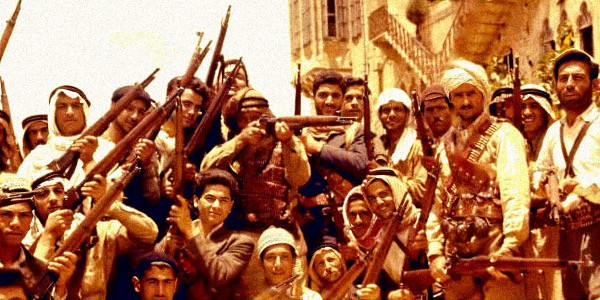
The Middle-East it seems, is no stranger to crisis – whether it’s Politics, religion or factions it invariably slips into Civil war. 1958 saw a crisis develop in Lebanon; one that would revisit the region over the next several decades.
The 1958 Lebanon crisis was a political crisis in Lebanon caused by political and religious tensions in the country that included a United States military intervention. The intervention lasted for around three months until President Camille Chamoun, who had requested the assistance, completed his term as president of Lebanon. American and Lebanese government forces occupied the Port of Beirut and Beirut International Airport. With the crisis over, the United States withdrew.
Tensions were increasing in Lebanon throughout early 1958. Although Chamoun’s term would have expired on 23 September 1958, he intended to run for president again, which was not permitted in the Constitution of Lebanon, and asked for American support in his effort. While the United States feared that a movement against Chamoun could harm their interests in the region, they were reluctant to withdraw support for him, as Fouad Chehab, the chief of staff of the Lebanese Army, was the most likely figure to succeed Chamoun. Robert M. McClintock, American ambassador to Lebanon, described Chehab as “a neutral legume who would require careful pruning to grow in the right direction. As a result, the US did not formally support Chamoun’s effort.
Protests by various groups—mainly the Sunnis and the Druzes—began in February against the Christian Chamoun, who had also aligned himself in support of the US and Britain, actions that protesters considered breaches of the National Pact. Demonstrations also protested that Chamoun had not allowed Lebanon to join the UAR. The protesters felt that “Chamoun was not willing to modify his foreign policy unless he was forced to.” Tensions between Maronite Christians and Arab Muslims continued to rise after the killing of Nasib Al Matni on 8 May. Matni was the editor of Al Telegraf and had been critical of Chamoun’s rule. Fighting erupted on the streets of Beirut as a Muslim mob burned the US Information Service library down. Heightened tensions existed around the country, including in the Beqaa Valley, where Shia militants were receiving weapons from Syria. The New York Times dated the beginning of a formal armed rebellion to 10 May 1958.Chamoun requested American military intervention in early May against the threat to his power under the Eisenhower Doctrine, although McClintock noted that there was an “absence of overt Communist aggression”.
The leader of the UAR, Nasser, began publicly calling for Arab unity. Various nations, including Lebanon, blamed Nasser’s actions for the increase in sectarian unrest, and the Lebanese government filed a formal complaint to the United Nations Security Council (UNSC) on 22 May 1958, accusing the UAR of meddling in the nation’s affairs.[30] The UNSC passed a resolution on 11 June 1958 that recommended sending a group to Lebanon “to ensure that there is no illegal infiltration of personnel or supply of arms or other material across the Lebanese borders”. A “Group of Three”—Galo Plaza, Rajeshwar Dayal and Odd Bull—Dag Hammarskjöld, the Secretary-General of the United Nations, and members of the United Nations Truce Supervision Organization were soon dispatched to Lebanon to form the United Nations Observation Group in Lebanon (UNOGIL).
Eisenhower responded by authorizing Operation Blue Bat on 15 July 1958, in the first application of the Eisenhower Doctrine in which the US announced that it would intervene to protect regimes that it considered to be threatened by international communism. The goal of the operation was to bolster Chamoun’s pro-Western Lebanese government from internal opposition and threats from Syria and Egypt. The plan was to occupy and secure Beirut International Airport, a few miles south of the city, and then to secure the port of Beirut and the approaches to the city.
In an interview and panel discussion from June 26, 1958 with Camille Chamoun for the CBS Radio program Radio Beat, a little less than a month before U.S. intervention, Chamoun had requested military intervention and he explains his reasons for doing so.
Here is that complete program.