
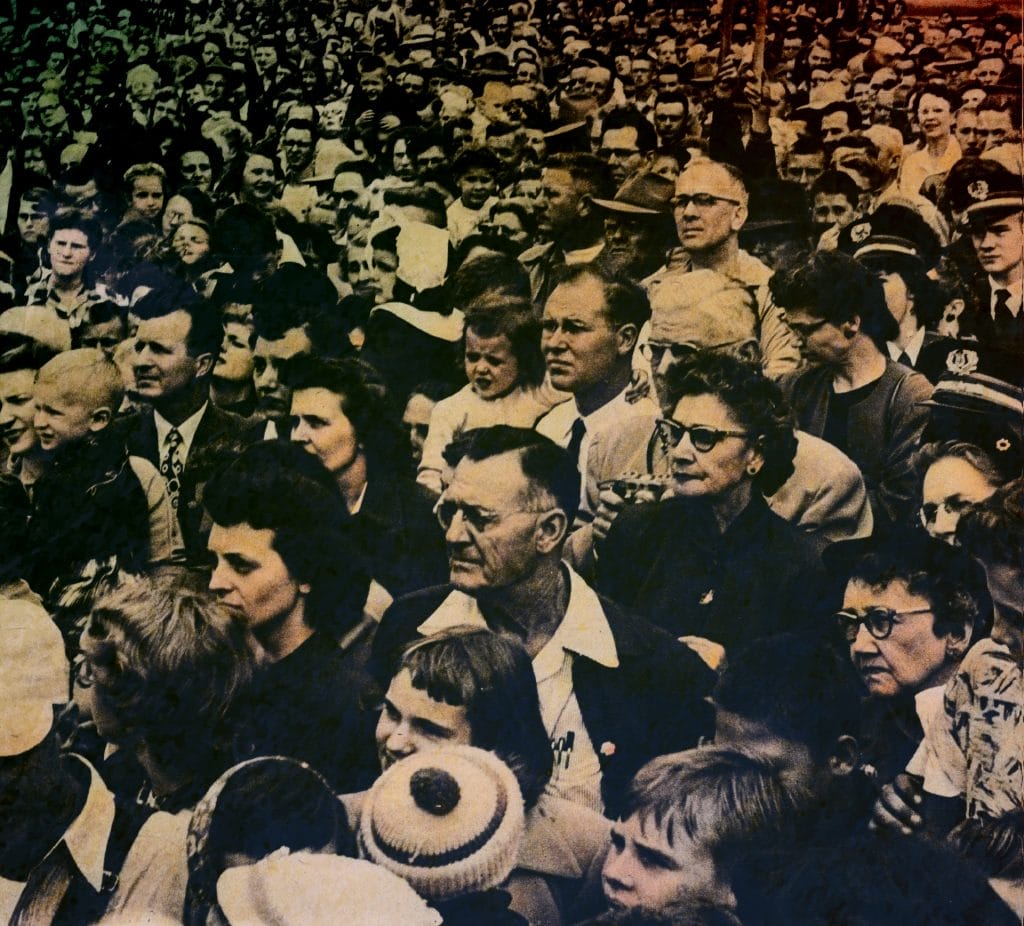
We baffled the rest of the world when it came to elections.
The American Presidential election of 1948 attracted considerable attention throughout Europe, particularly in nations struggling to rebuild democratic institutions after the devastation of World War II. Among the observers was German journalist Eric Reger, editor of the Berlin newspaper Der Tagesspiegel, who visited the United States and reported his impressions to European audiences. His observations were especially significant because Germany itself was in the process of reconstructing a democratic political culture. To Europeans emerging from dictatorship, occupation, and political upheaval, the American electoral system appeared both familiar and surprisingly different.
One of the first aspects of American politics that impressed European observers was the remarkable stability of the two-party system. In much of Europe, politics traditionally revolved around multiple parties representing a wide range of ideologies, social classes, religious interests, and regional concerns. Coalition governments were common, and political alliances often shifted after elections. By contrast, Americans seemed content to channel political debate through two major parties—the Democrats and Republicans—even though those parties themselves contained broad and often conflicting viewpoints.
To many Europeans, this arrangement appeared unusual. They wondered how a nation as large and diverse as the United States could be adequately represented by only two major political organizations. Germans, French, Italians, and others were accustomed to seeing several parties compete for influence. Yet Reger and other European commentators also recognized an advantage in the American system: it encouraged political moderation. Because each party needed support from a wide range of voters, extreme positions were often softened in favor of broader national appeal.
The 1948 election itself offered a fascinating example. President Harry Truman faced challenges not only from Republican candidate Thomas E. Dewey but also from two significant third-party movements. Strom Thurmond represented the States’ Rights Democratic Party, while former Vice President Henry Wallace ran as the Progressive Party candidate. To European observers, this looked more like the kind of political fragmentation they were familiar with at home. Nevertheless, the American system ultimately absorbed these challenges without threatening governmental stability. Even with multiple candidates in the race, the contest remained centered on the two major parties.
European observers were also struck by the intensity and openness of American campaigning. In many countries, particularly those recently liberated from authoritarian rule, vigorous public criticism of government leaders had only recently become possible again. Americans, however, seemed to take such criticism for granted. Candidates traveled extensively, newspapers endorsed opponents openly, and voters engaged in lively political debate. The election campaign unfolded before the public with a degree of transparency that many Europeans found refreshing.
Another feature that attracted attention was the decentralized nature of American elections. Europeans often expected national elections to be administered from the center of government. Instead, they discovered a complex system in which states and localities played major roles in administering elections. The Electoral College itself was often a source of confusion. Many Europeans questioned why a candidate could not simply be elected through a direct national vote. Yet they also came to understand that the system reflected the federal nature of the American republic and the historic balance between state and national authority.
The surprise outcome of the 1948 election further reinforced European respect for American democracy. Nearly every poll, newspaper, and political expert expected Dewey to win. Truman’s victory shocked observers on both sides of the Atlantic. Yet the transition from prediction to reality occurred peacefully and without controversy. The willingness of Americans to accept unexpected election results demonstrated the strength of democratic norms that many Europeans were still striving to rebuild after years of war and dictatorship.
Looking back from the perspective of today’s mid-term elections, Reger’s observations remain remarkably relevant. Modern Americans often focus on the polarization and frustrations associated with the two-party system. Yet from the perspective of postwar Europeans, the system’s greatest strength was its ability to provide continuity, stability, and peaceful competition for power. While European democracies have generally retained their multi-party traditions, the United States continues to rely on a political structure that channels national debate into two major competing coalitions.
The questions that fascinated European observers in 1948 are still being debated today. Does the two-party system encourage unity or limit political choice? Does it promote moderation or deepen division? Regardless of the answers, one lesson remains clear. To Europeans emerging from the wreckage of war, the most impressive feature of American elections was not the parties themselves, but the public’s enduring confidence in democratic institutions. That confidence, more than any particular electoral mechanism, was what made American democracy worthy of study and admiration.
Here is the talk Eric Reger gave over CBS Radio during the 1948 Election season. Still baffling – still fascinating – hopefully, still around.