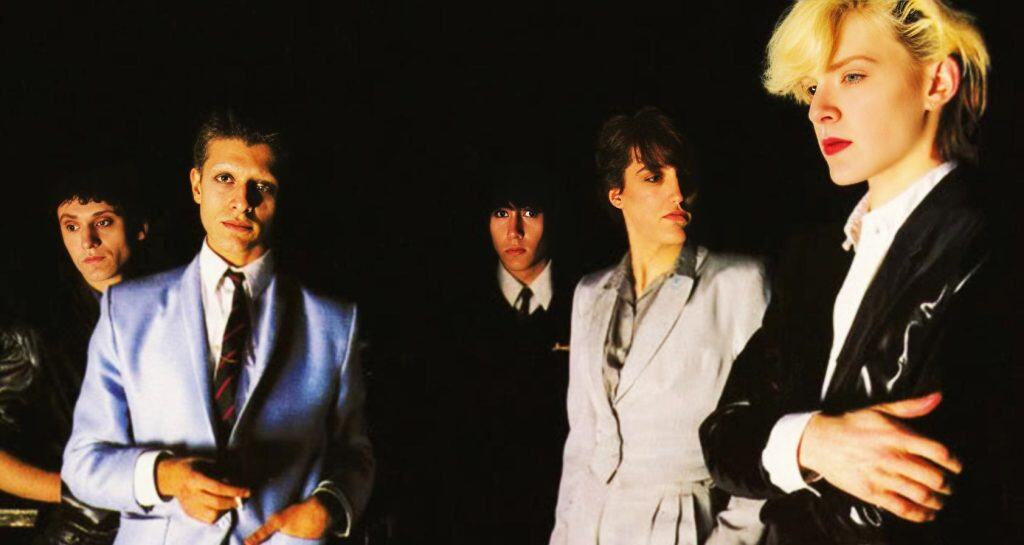
Ending up the week with a concert by Japan – recorded by BBC Radio 1 for their In Concert Series at The Hammersmith Odeon in 1981.
A brief rundown via Wikipedia:
Japan formed in 1974 in South London by David Sylvian (vocals, guitar, keyboards), Steve Jansen (drums) and Mick Karn (bass guitar), joined the following year by Richard Barbieri (keyboards) and Rob Dean (lead guitar). Initially a glam rock-inspired band, Japan developed their sound and androgynous look to incorporate electronic music and foreign influences.
Japan achieved success in the late 1970s and early 1980s, releasing nine UK top 40 hits, including the 1982 top 5 hit single “Ghosts”, and scoring a UK top 5 with the live album Oil on Canvas (1983). Six of the band’s albums have achieved Gold status in the UK. The band split in December 1982, just as they were beginning to experience commercial success in the UK and abroad. Its members went on to pursue other musical projects, though they reformed briefly in the early 1990s under the name Rain Tree Crow, releasing an album in 1991.
In March 1978, the band released their first single, a cover version of “Don’t Rain on My Parade” followed a month later by their debut album Adolescent Sex. Advertising campaigns that focused on the band’s androgynous glam rock image failed to attract much interest for the band in the UK but was more successful in Japan where the band attracted a considerable fan following before a record had been released.
The debut album was followed by a UK tour supporting Blue Öyster Cult, intended to promote their album. The album itself sold poorly, and Japan faced negative criticism and hostile audiences. In August 1978 their second single, “The Unconventional,” failed to chart. In November the band made a short US tour, but although they were better accepted by American audiences it proved to be their last and only US tour. The follow-up album Obscure Alternatives showed musical progress and particularly the last track “The Tenant” – which has been described as a fusion of Low-era David Bowie and the piano works of Erik Satie – was a hint of the band’s future, but again the album was a commercial and critical flop.
Though influenced by artists such as Lou Reed, T. Rex, New York Dolls, Roxy Music and David Bowie, both albums were widely dismissed by the UK music press as being distinctly outmoded at a time when punk and new wave bands were in ascendance. However, both albums, produced by Ray Singer, sold well in Japan and the Netherlands, where the single version of “Adolescent Sex” was a top 30 hit. They also gained some popularity in Canada. But in their native UK, those albums failed to garner public attention and did not chart.
While unsuccessful in their home country, the band gained a huge popularity in Japan. In March 1979, they made their first visit to the country and sold out the 11,000 seat capacity Budokan Theatre three days in a row.
The group’s final UK performances included a final TV appearance playing together on The Old Grey Whistle Test in October and culminating in a six-night sell-out stint at London’s Hammersmith Odeon in November (which would be recorded and filmed to produce Oil on Canvas, a live album and video released in June 1983). Japan’s last performance was on 16 December 1982 in Nagoya, Japan.
The band decided to split just as they were beginning to achieve major commercial success both in the UK and internationally, with Oil on Canvas becoming their highest charting UK album, reaching No. 5 on the UK Albums Chart, a rare feat for a live album. By this time, the band’s back catalogue had begun to sell steadily and both Hansa-Ariola and Virgin Records continued to release Japan singles into 1983, ultimately earning the band a total of nine top 40 hits in the UK. In summer 1982, a Hansa re-release of “I Second That Emotion” became Japan’s second top 10 hit, reaching number 9. A remixed version of “Life in Tokyo” and a Virgin Records release of “Nightporter” were subsequently both top 30 hits on the UK Singles Chart.
In case you forgot, now you know – in the event you have become a fan of Kpop lately, you might want to consider Japan as one of the huge influences in Kpop style. Just saying.