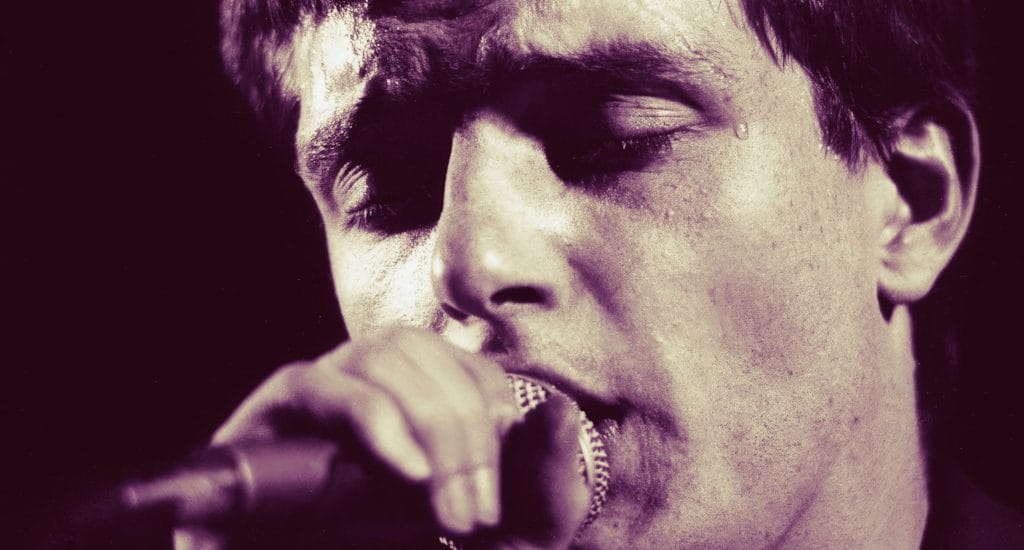
Ian Curtis of Joy Division – Cultural icon.
Joy Division in concert for this Monday lunch – recorded at Les Bains Douches in Paris on December 18, 1979 for RFI – The Black Sessions.
One of the pioneering bands of the Post-Punk era, Joy Division consisted of vocalist, guitarist and lyricist Ian Curtis, guitarist and keyboardist Bernard Sumner, bassist Peter Hook and drummer Stephen Morris.
Sumner and Hook formed the band after attending a June 1976 Sex Pistols concert. While Joy Division’s first recordings were heavily influenced by early punk rock, they soon developed a sparse sound and style that made them one of the pioneering groups of the post-punk genre. Their self-released 1978 debut EP An Ideal for Living drew the attention of the Manchester television personality Tony Wilson, who signed them to his independent label Factory Records. Their debut album Unknown Pleasures, recorded with producer Martin Hannett, was released in 1979.
Curtis struggled with personal problems, including a failing marriage, depression, and epilepsy. As the band’s popularity grew, Curtis’s health condition made it increasingly difficult for him to perform; he occasionally experienced seizures on stage. He died by suicide on the eve of what would have been the band’s first North American tour in May 1980, aged 23. Joy Division’s second and final album, Closer, was released two months later; it and the single “Love Will Tear Us Apart” became their highest-charting releases.
Between July and October 1980, the remaining members, with the addition of keyboardist and guitarist Gillian Gilbert, regrouped under the name New Order. They were successful throughout the next decade, blending post-punk with electronic and dance music influences. Joy Division would remain a prominent influence on subsequent generations of alternative acts, particularly within the gothic rock genre. In 2026, both Joy Division and New Order were inducted as one act into the Rock and Roll Hall of Fame.
If you weren’t around at the time, the story of Joy Division and Ian Curtis is most likely the stuff of legend. To give you some idea of what that legend sounded like, this concert from Paris gives you an accurate idea of the experimental and pioneering nature of the band and what they laid the groundwork for in the late 1970s and, as New Order (after Curtis’ death), what influence they had.
Not for all tastes, but for enough tastes to make a difference – Here’s to lunch.