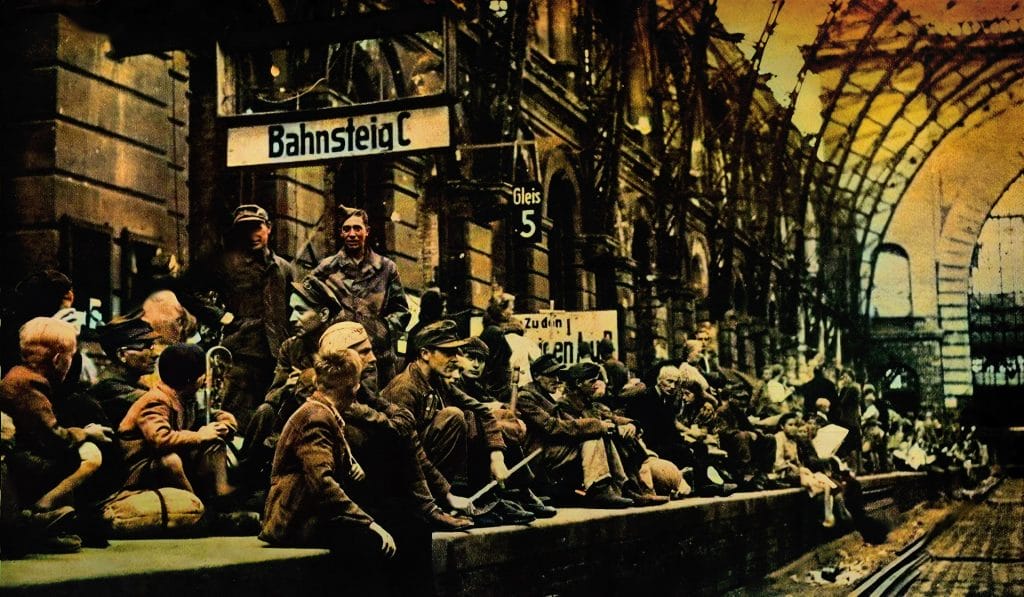
Berlin – cleaning up the mess took time.
A discussion on Foreign Policy and decisions made at the close of World War 2, looked at and analyzed 20 years later during the program the Open Mind, broadcast in 1965.
At the heart of the discussion was the lingering shadow of World War II. By 1965, the war had ended twenty years earlier, yet its consequences remained deeply embedded in the geopolitical structure of the Cold War. Decisions taken under the pressure of total war—alliances of convenience, the use of atomic weapons, and the redrawing of national boundaries—had not only resolved one conflict but had also laid the groundwork for new tensions, particularly between the United States and the Soviet Union.
One central theme explored in the program was the moral ambiguity of wartime decision-making. Actions that were justified as necessary for victory in the 1940s appeared more complex, even troubling, in retrospect. The use of atomic bombs on Japan, for instance, was discussed not only as a military strategy but also as an ethical precedent that influenced nuclear policy in the decades that followed. In a world now defined by the threat of mutually assured destruction, such decisions took on renewed urgency and controversy.
Equally significant was the question of leadership and responsibility. Wartime leaders had operated under extraordinary constraints, often forced to choose between imperfect options with incomplete information. The program emphasized that these decisions could not be understood in isolation; rather, they must be evaluated within the broader context of survival, public opinion, and the unpredictable nature of war. Yet, in the postwar period, those same decisions were subject to reinterpretation, criticism, and political use, particularly as Cold War rivalries intensified.
The episode also highlighted the continuity between wartime alliances and postwar divisions. The uneasy partnership between the United States and the Soviet Union during World War II quickly gave way to ideological confrontation. Policies that had once been pragmatic—such as territorial concessions or spheres of influence—became sources of enduring mistrust. In this sense, the program suggested that the seeds of the Cold War were not merely planted after 1945 but were inherent in the compromises made during the war itself.
Finally, “Wartime Decisions in the Postwar World” underscored the importance of historical reflection in democratic society. By revisiting these critical moments, The Open Mind encouraged viewers to grapple with the complexities of policy-making and the long-term consequences of political choices. The episode served as a reminder that history is not static; it is continually reinterpreted in light of present concerns.
In 1965, as the United States faced new challenges abroad, including escalating involvement in Vietnam, the questions raised by the program were especially resonant. How should a nation balance moral considerations with strategic necessity? And to what extent do the decisions of one generation bind the next? In raising these issues, The Open Mind demonstrated the enduring relevance of wartime experience in shaping the postwar world.
Here is that episode.