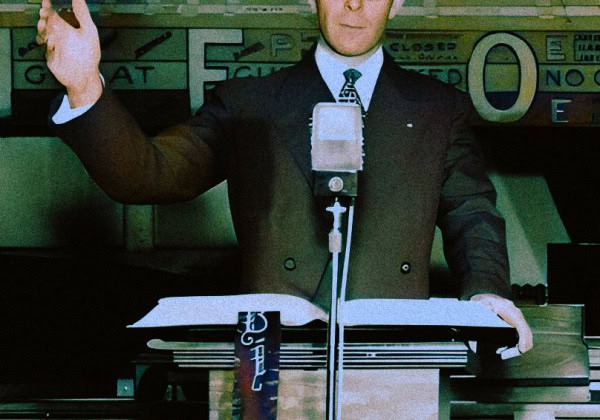
Religion and Radio were synonymous since Radio got started in the 1920s, and the airwaves were full of them. A lot of hellfire and brimstone, a lot of proclaiming. In the 1930s it was getting political and sometimes inflammatory – sometimes it took epic proportions, especially when something was going on at The Vatican and it was possible for the first time to actually listen to the Pope directly from Rome into your living room. America had its fair share of Aimee Semple McPherson, Father Coughlin, Father Divine and a whole growing host of others – all in the name of saving souls in the comfort of your living room, usually with the family grouped faithfully around the radio.
But it was mostly about raising money – and the pitch for nickels, dimes and dollars to support the myriad number of ministries springing up all over the country, each with a different pitch, each with a different appeal and charismatic practitioner was the main attraction.
The ritual continued and still does to some degree. But in the 1950s it became much more subtle and low-key. There was a distinct turn-off with the hellfire and brimstone sermons by some, even though the likes of Billy Graham, The Old Fashioned Revival Hour and countless others were mainstays throughout America and radio still hummed every Sunday with groups, choirs and Tabernacles along with messages from the Pulpit were mirrors of social upheavals of the day, there was a growing trend towards the more thoughtful, but no less persistent pitch for cash.
Among the many who sought this distinctly serene path, particularly along the West Coast are two examples of what you could dial into every Sunday especially around Los Angeles. Dr. Murphy was a staple on radio as well as a live Church service from the Wilshire Ebell Theatre near the Miracle Mile section of L.A. – Unity Viewpoint was a “Daily Reflections” broadcast that originated in Missouri but was hugely popular on the West Coast. These two broadcasts are from June of 1956 and represent an aspect of broadcasting you just don’t hear anymore. They still wanted your money, but they made you feel good about doing it.
Radio was a little bit of everything to everybody, and the 1950s were still a period where things were only starting to change.
Have a listen.