Taking a short side trip from our ongoing survey of the Swiss Radio Archives and heading over to Poland for a sampling of what’s in the archives of Radio Poland.
This weekend it’s a performance of Musica Sinfonica in Three Movements by composer/violinist Grazyna Bacewicz, performed by the Polish Radio Symphony conducted by Boguslav Madey.
It’s a guess this recording was made shortly after its world premier in 1965, or may in fact be the world premier itself, as there is no date confirming that information, other than the date this particular tape was copied, which was August 2, 1971 – it’s also a date featured on several other Polish Radio items. Suffice to say this recording is not recent, by any stretch.
Over to Wikipedia for an English translation of the Polish entry:
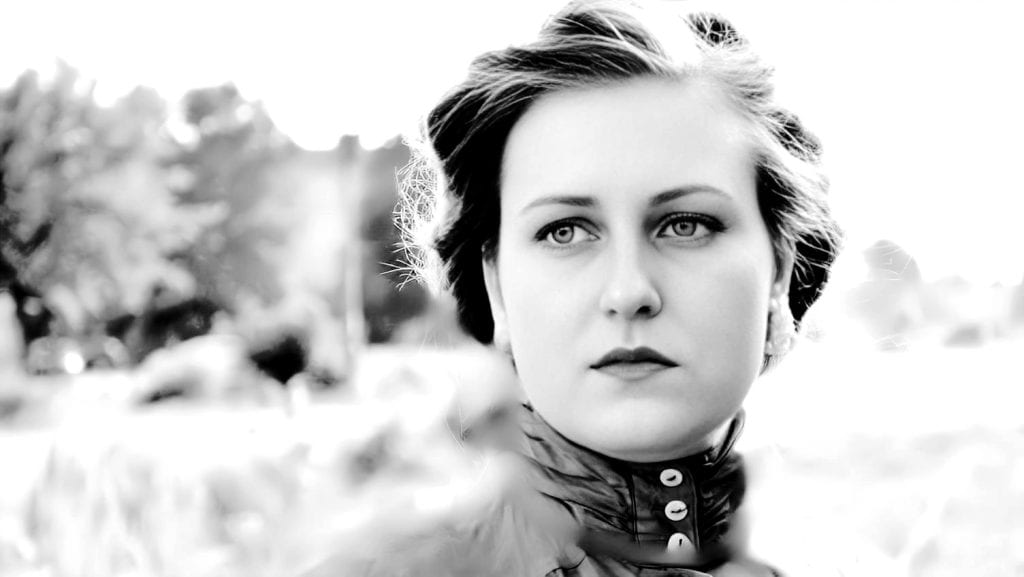
Grazyna Bacewicz was born in Łódź on February 5, 1909 to parents Maria and Vincas (Wicenty) Bacewicz. Her father, having been from Lithuania, instilled a deep connection to their Lithuanian heritage, despite changing his name from the Lithuanian Bacevičius to Bacewicz. He also was her first music teacher, and insisted all four of their children study violin, piano, and fundamental music theory from a young age.
Grażyna was the third of four children, with two older brothers, Kiejstut and Vytautas, and one younger sister, Wanda. Vytautas identified as Lithuanian, using his father’s original last name (Bacevičius), and also became an accomplished pianist and composer. Grażyna performed her first concert at the age of seven, alongside her brothers, and she wrote her first piece at around thirteen years old.
In 1928, she began studying at the Warsaw Conservatory, where she studied violin with Józef Jarzębski and composition with Kazimierz Sikorski; she also studied piano with Józef Turczyński for two semesters. After graduating in 1932, she attended composition classes led by Nadia Boulanger at the École Normale de Musique. During this time, she continued to play violin, and studied with André Touret and Carl Flesch.
After completing her studies, Bacewicz continued her musical career as both a composer and performer, appearing as a soloist and acting as a jury member for competitions. She served as the concertmaster of the Polish National Radio Symphony Orchestra, directed by Grzegorz Fitelberg from 1936-1938. During this time, the orchestra performed her first violin concerto, as well as her Three Songs for tenor and orchestra. She married her husband, physician and medical professor Adrzej Biernacki, in 1936, and the couple had a daughter, Alina Biernacka, in 1942.
During World War II, Bacewicz moved to Warsaw, where she continued to compose and perform in secretive underground concerts, which is where she premiered her Suite for Two Violins.[6] Following the Warsaw uprising, Bacewicz and her family escaped the destroyed city and temporarily settled in Lublin.
After the war, she took up a position as a professor at the State Conservatoire of Music in Łódź. “Bacewicz’s reputation grew during the post-war era, despite the general censorship resulting from political realisation of socialist cultural reforms”. Despite the ideological control of arts, Bacewicz continued composing from 1945 to 1955, even though it was difficult to perform many of them. With her rising recognition, as well as growing number of awards and commissions, she began to shift her focus towards composition. In 1954, she was involved in a car accident, causing her family minor injuries, but breaking Bacewicz’s pelvis and some of her ribs, hospitalizing her for an extended period. This forced her to consider composition as her only occupation, as she was no longer able to perform.
In 1956, the first Warsaw Autumn Festival featured three of her compositions, and at each of the Autumn Festivals in subsequent years, her music became a signature of the events. Her output became prolific during this time, and was widely acclaimed. She continued to compose until her death in 1969 in Warsaw.
The Polish Radio Symphony is led by Boguslav Madey, himself a composer in his own right, but his career also involved conducting, particularly music from contemporary Polish composers.
Alongside his work as a conductor, he was a pedagogue: in 1958-59 Boguslaw Madey lectured in piano at the State Higher School of Music in Poznań; from 1960 he was associated with the conducting class at the State Higher School of Music in Warsaw – initially as a lecturer, then an associate professor, then a professor (full professor from 1989); at the same university (from 1979 the Fryderyk Chopin Academy of Music) he was head of the Department of Conducting and Music Theory from 1969-71; and rector from 1978-81. From 1978 to 1982 he was also President of the Association Europeenne des Conservatoires, Academies de Musique et Musikhochschulen. As a Visiting Professor, he taught conducting at Keimyung University in South Korea in 1995 and 1997-98. Since 1999, he has once again been Head of the Conducting Department at the Fryderyk Chopin Academy of Music in Warsaw. His graduate students include Jerzy Maksymiuk , Wojciech Rajski , Tadeusz Kozłowski , Tadeusz Wicherek , Piotr Borkowski , Piotr Wajrak , Paweł Kotla , Marcin Nałęcz-Niesiołowski , and Łukasz Borowicz . Professor Madey’s last graduate was his son, Emilian.
Press play and go exploring.
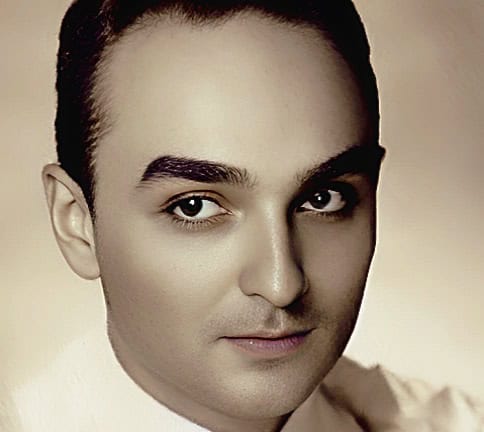
Boguslav Madey – leads the Polish Radio Symphony.