
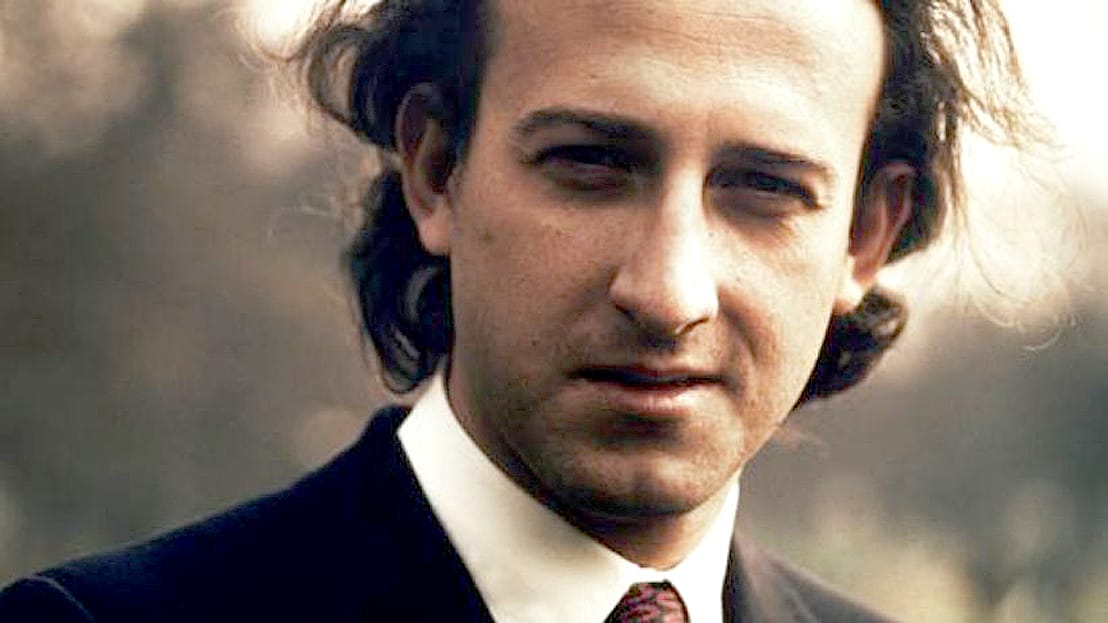
Boston Symphony – Seiji Ozawa, Cond. – Maurizio Pollini, Piano – March 10, 1983 – Gordon Skene Sound Collection –
Only two works this week, but they are widely admired works done by one of the world’s great symphony orchestras, with a much beloved Music Director at the Podium and a legendary pianist playing a work he is well known for.
Starting off with a performance of the Symphony Number 2 by Charles Ives, his second of four symphonies he would compose during his lifetime. Ives’ music was largely ignored during his life, particularly during the years in which he actively composed. Many of his published works went unperformed even many years after his death in 1954. However, his reputation in more recent years has greatly increased. Juilliard commemorated the fiftieth anniversary of his death by performing his music over six days in 2004. His musical experiments, including his increasing use of dissonance, were not well received by his contemporaries. Furthermore, the difficulties in performing the rhythmic complexities in his major orchestral works made them daunting challenges even decades after they were composed.
Early supporters of Ives’ music included Henry Cowell, Elliott Carter and Aaron Copland. Cowell’s periodical New Music published a substantial number of Ives’ scores (with his approval), but for almost 40 years he had few performances that he did not arrange or back, generally with Nicolas Slonimsky as the conductor. After seeing a copy of his self-published 114 Songs during the 1930s, Copland published a newspaper article praising the collection.
The Ives is followed by a performance of Brahms’ Piano Concerto Number 2 with Maurizio Pollini as soloist.
Pollini was born in Milan to the Italian rationalist architect Gino Pollini, who has been said to have been the first to bring Modernist architecture to Italy in the 1930s. Pollini studied piano first with Carlo Lonati, until the age of 13, then with Carlo Vidusso, until he was 18. He received a diploma from the Milan Conservatory and won both the International Ettore Pozzoli Piano Competition in Seregno (Italy) in 1959 and the International Chopin Piano Competition in Warsaw in 1960. Arthur Rubinstein, who led the jury, declared Pollini the winner of the competition, allegedly saying: “that boy can technically play the piano better than any of us”. Soon afterwards, he recorded Chopin’s Concerto No. 1 in E minor with the Philharmonia Orchestra under the Polish conductor Paul Kletzki for EMI, and taped performances of Chopin’s etudes. When the Philharmonia offered Pollini a series of concerts, he experienced what EMI producer Peter Andry has called “an apparent crisis of confidence”. After this, he studied with Arturo Benedetti Michelangeli, from whom he is said to have acquired “a precise technique and emotional restraint”, although some have expressed a concern that Michelangeli’s influence resulted in Pollini’s playing becoming “mannered and cold”. During the early 1960s, Pollini limited his concertizing, preferring to spend these years studying by himself and expanding his repertoire.
Since the mid-1960s, he has given recitals and appeared with major orchestras in Europe, the United States, and the Far East. He made his American debut in 1968 and his first tour of Japan in 1974.
During the 1960s and 1970s, Pollini was a left-wing political activist. He collaborated with Luigi Nono in such works as Como una ola de fuerza y luz (1972), which was to mourn the assassination of Luciano Cruz, a leader of the Chilean Revolutionary Front. He performed with Claudio Abbado at La Scala in a cycle of concerts for students and workers, in an attempt to build a new public as they believed that art should be for everybody.
Two works at opposite ends of the musical spectrum, but both highly enjoyable – and certainly in keeping with the spirit of Anti-Road Rage Wednesday.
Turn it up – relax and enjoy.
As you know, we’ve suspended indefinitely our ads in order to make Past Daily a better experience for you without all the distractions and pop-ups. Because of that, we’re relying more on your support through Patreon to keep us up and running every day. For as little as $5.00 a month you can make a huge difference as well as be able to download all of our posts for free (news, history, music). You’ll see a banner just below. Click on that and become a subscriber – it’s easy, painless and does a world of good.


