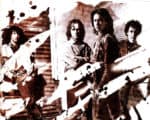

– The Cure live at Glastonbury 1990 –
Starting the morning off with a blast of The Cure, in concert from Glastonbury in 1990.
The Cure (of which Robert Smith is the only remaining original member) have had a long and highly successful career. Weathering the changes of personnel and musical direction, The Cure have always remained fresh – something that’s tough to do in this environment of constant shifts and changes in music. There has always been a loyal following and it’s one that keeps growing ever since they got started in 1978. Needless to say, it’s been a road far from dull.
In 1989, the Cure released the album Disintegration, which was critically praised and became their highest-charting album to date, entering at number three in the UK and featuring three Top 30 singles in the UK and Germany: “Lullaby”, “Lovesong” and “Pictures of You”. Disintegration also reached number 12 on the US charts. The first single in the US, “Fascination Street”, reached number one on the American Modern Rock chart, but was quickly overshadowed when its third US single, “Lovesong”, which reached number two on the American pop charts (the only Cure single to reach the US Top 10). By 1992, Disintegration had sold over three million copies worldwide.
During the Disintegration sessions, the band gave Smith an ultimatum that either Tolhurst would have to leave the band or they would. In February 1989, Tolhurst’s exit was made official and announced to the press; this resulted in O’Donnell becoming a full-fledged member of the band and left Smith as the Cure’s only remaining founding member. Smith attributed Tolhurst’s dismissal to an inability to exert himself and issues with alcohol, concluding, “He was out of step with everything. It had just become detrimental to everything we’d do.” Because Tolhurst was still on the payroll during the recording of Disintegration, he is credited in the album’s liner notes as playing “other instruments” and is listed as a co-writer of every song; however, it has since been revealed that while Tolhurst had contributed to the song “Homesick”, his contributions to the rest of the album were minimal due to his alcoholism.
The Cure then embarked on a successful tour which saw the band playing stadiums in the US. On 6 September 1989, the Cure performed “Just Like Heaven” at the 1989 MTV Video Music Awards at the Universal Amphitheatre in Los Angeles. In May 1990, O’Donnell quit and was replaced by Perry Bamonte, who played both keyboards and guitar and had been a member of the band’s road crew since 1984. That November, the Cure released a collection of remixes called Mixed Up. The one new song on the collection, “Never Enough”, was released as a single. In 1991, the Cure were awarded the Brit Award for Best British Group. That same year, Tolhurst filed a lawsuit against Smith and Fiction Records over royalties payments and claimed that he and Smith jointly owned the name “The Cure”; the lawsuit finally ended in 1994 in favour of Smith. In the meantime, the band returned to the studio to record their next album. Wish (1992) reached number one in the UK and number two in the US and yielded the international hits “High” and “Friday I’m in Love”. The album was also nominated for the Grammy Award for Best Alternative Music Album in 1993. In the autumn of 1993, the band released two live albums, Show and Paris, featuring recordings from concerts on their world Wish tour.
Head back to 1990 for their memorable Glastonbury gig.