The issue of Universal Military Training (UMT) occupied an important, if often overlooked, place in American political debate during the early Cold War years. By the time of the 1952 presidential campaign between Dwight D. Eisenhower and Adlai Stevenson II, the United States had already experienced World War II, the beginning of the Cold War, and the bloody stalemate of the Korean War. Americans were increasingly concerned about national defense, Communist expansion, and the possibility of another global conflict. Within that atmosphere, Universal Military Training became a subject of serious national discussion and appeared frequently in political forums such as the radio program Candidates and Issues during 1952.
Universal Military Training was often confused with the draft, but the two concepts were fundamentally different. The draft, formally known as conscription or Selective Service, required young men to serve in the armed forces for a fixed period when the government needed manpower. During World War II and again during the Korean War, drafted men were placed directly into active military service and could be sent into combat. The draft was therefore an emergency system designed to rapidly build armed forces during wartime or international crisis.
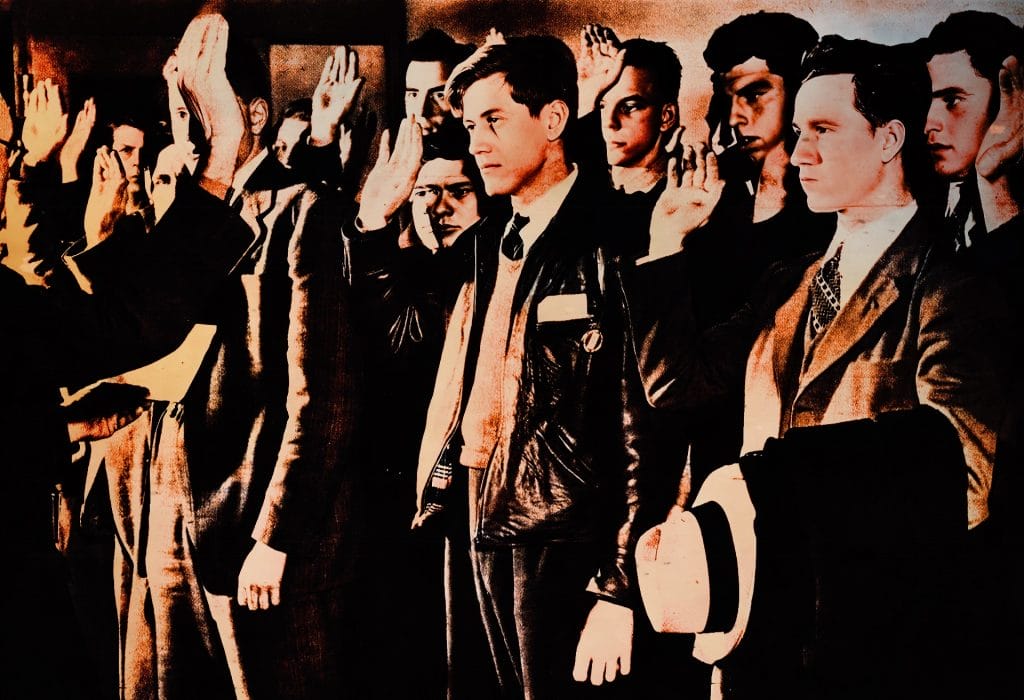
Universal Military Training, by contrast, was intended as a permanent peacetime program. Advocates proposed that all young men, usually at age eighteen, receive several months of basic military instruction whether or not the nation was at war. After completing training, these individuals would return to civilian life but remain part of a large reserve force available in the event of national emergency. Supporters argued that UMT would create a population already prepared for defense, reducing the need for hurried mobilization if war broke out.
The idea gained momentum after World War II. Military leaders, including Harry S. Truman and many Pentagon officials, believed the United States could no longer rely on isolation or slow mobilization. The emergence of the Soviet Union as a rival nuclear power heightened fears that future wars might arrive with little warning. The outbreak of the Korean War in 1950 strengthened arguments for preparedness even further.
Yet public opinion on Universal Military Training remained sharply divided. Supporters viewed it as a practical compromise between maintaining a huge standing army and relying entirely on emergency conscription. Many veterans believed basic training promoted discipline, physical fitness, and national unity. Some educators and civic leaders even argued that shared military experience could reduce class differences and strengthen citizenship among young Americans.
Opponents, however, saw serious dangers in the proposal. Civil libertarians feared UMT would militarize American society and give the military excessive influence over civilian life. Religious groups and pacifists objected to compulsory military instruction on moral grounds. Others worried about the economic cost of maintaining enormous training programs during peacetime. Parents frequently disliked the idea of mandatory training for all young men regardless of circumstance.
There was also a political concern that Universal Military Training might normalize permanent military readiness and contribute to what critics increasingly called a “garrison state.” After fighting two world wars within a generation, many Americans remained uneasy about adopting systems that resembled the compulsory military structures common in Europe. Critics insisted that America’s democratic traditions depended upon civilian priorities rather than constant military organization.
During the 1952 presidential campaign, debate over defense policy reflected broader questions about Cold War strategy. Republicans criticized the Truman administration for the frustrations of the Korean War, while Democrats defended the necessity of strong military preparedness against Communism. Although UMT itself was not the single defining issue of the election, it symbolized the larger national anxiety of the era: how could the United States remain secure without sacrificing democratic freedoms or becoming permanently militarized?
Ultimately, Universal Military Training was never fully adopted in the sweeping form many advocates envisioned. The United States continued instead with the Selective Service system and reserve programs throughout the Cold War. Nevertheless, the debate surrounding UMT revealed the profound uncertainty Americans felt in the early 1950s as they attempted to balance liberty, security, and preparedness in a world increasingly shaped by nuclear tension and ideological conflict.
An example of the debate over Universal Military Training is heard on this CBS Radio Program Candidates And Issues from June 10,1952 which features a broad swath of Presidential hopefuls in the 1952 election.