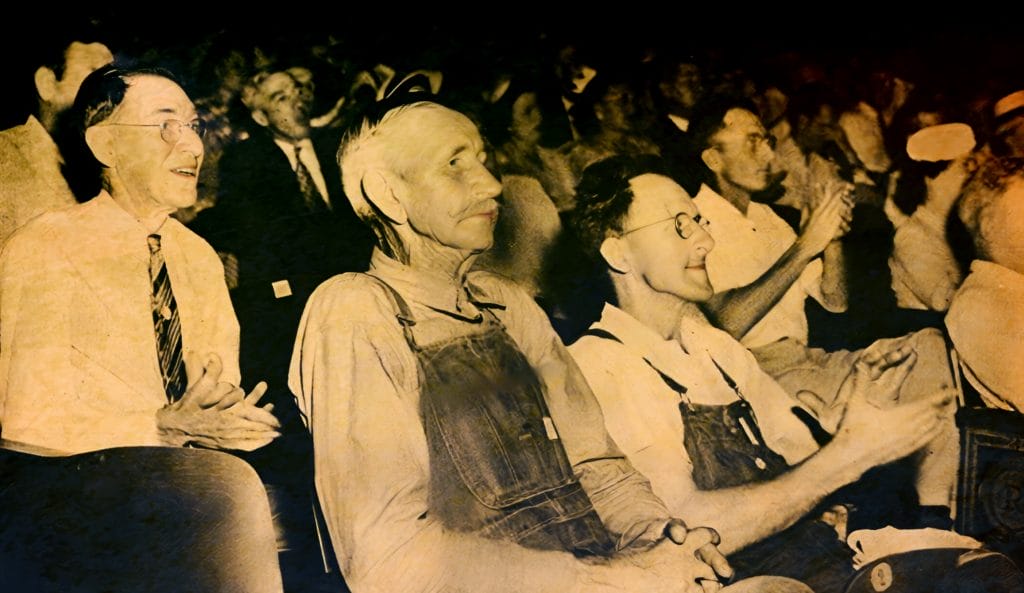
America votes – for the first time since the end of the War. There was a change afoot.
The congressional Primary elections of 1946 were among the most significant midterm elections in modern American history. Held only a year after the end of the Second World War, they reflected a nation struggling to adjust from wartime unity to peacetime uncertainty. The results dramatically altered the political landscape of the United States and signaled the beginning of a new era in American politics, one shaped by Cold War anxieties, labor unrest, and growing public impatience with government controls and shortages.
President Harry S. Truman and the Democratic Party entered 1946 in a difficult position. Democrats had controlled the White House continuously since 1933 under Franklin D. Roosevelt, and many voters were weary after more than a decade of New Deal government and the extraordinary demands of wartime administration. Although victory in World War II had brought relief and pride, it also produced severe economic dislocation. Millions of servicemen were returning home seeking jobs and housing. Wartime price controls and rationing remained in place, consumer goods were scarce, and inflation rose sharply once restrictions began to ease.
At the same time, the nation experienced one of the largest waves of labor strikes in American history. In 1945 and 1946, workers in steel, coal, railroads, automobiles, and other industries walked off the job demanding higher wages to match rising prices. To many Americans, the strikes created a sense that the country was slipping into disorder just as peace had supposedly been restored. Republicans capitalized on this frustration by campaigning on promises of efficiency, reduced government intervention, and a return to economic stability.
The Republican slogan “Had Enough?” became one of the most effective political messages of the twentieth century. It appealed to voters tired of shortages, inflation, strikes, and Democratic dominance. In the November elections, Republicans achieved a sweeping victory, gaining 55 seats in the House of Representatives and 12 in the Senate. For the first time since 1930, the Republican Party controlled both chambers of Congress.
The importance of the 1946 Primary election extended far beyond party politics. The new Republican Congress quickly moved to curb the power of organized labor through the passage of the Taft–Hartley Act in 1947, despite President Truman’s veto. This legislation restricted union activities and marked a major turning point in labor relations in the United States. It demonstrated that the political climate of the New Deal era was changing and that business-oriented conservatism was regaining influence.
The elections also shaped the early Cold War. By 1946, tensions between the United States and the Soviet Union were growing rapidly. Republicans frequently accused the Truman administration of weakness or confusion in foreign affairs, while Democrats argued that continued international engagement was necessary to preserve peace. The political debates emerging from the election foreshadowed the anti-Communist atmosphere that would dominate American politics in the late 1940s and 1950s.
Perhaps most importantly, the 1946 elections revealed the fragility of wartime unity. During World War II, Americans had largely rallied together behind a common cause. Once the war ended, however, old political divisions quickly resurfaced. Economic fears, ideological conflicts, and disagreements over the role of government returned with full force. The election became a national referendum on how the United States would navigate the uncertain transition from war to peace.
In retrospect, the 1946 midterms marked the beginning of postwar American politics. They signaled the decline of unquestioned New Deal liberalism, strengthened conservative forces in Congress, and set the stage for the political and social struggles that would define the early Cold War era.
To further illustrate, here is an episode from the Radio discussion program Northwestern Reviewing Stand from Mutual Broadcasting on August 4, 1946 discussing the upcoming Primary elections and their implications.