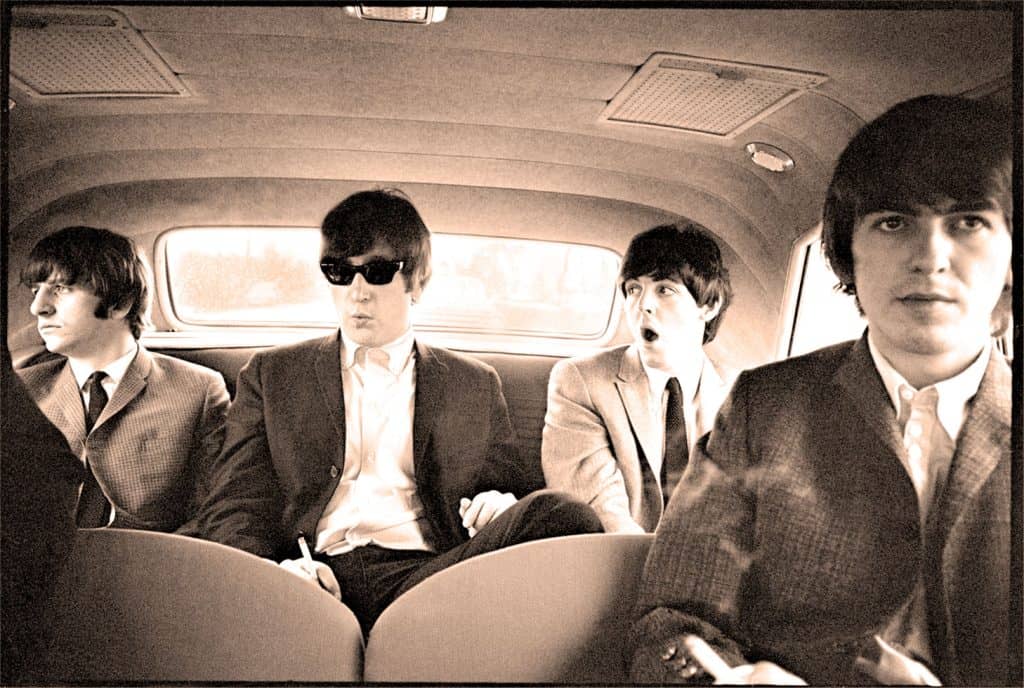
– Four College Lecture Hall – Michael Irwin – Lecture at Smith College – Eastern Educational Radio Network – January 13, 1966 – Gordon Skene Sound Collection –
With the release of what has been declared “the last new Beatles single” and the avalanche of reviews, opinions, recollections, nostalgia, snarks and tears that are going along with it, I remember a time when mass media; radio, TV and newspapers were all part of the older generation, the generation of our parents. Our parents, who were baffled, more than a little intimidated and genuinely perplexed that these four musicians who looked strange to them could capture the hearts and minds of the World of under-30 so completely and usher in The Come Alive Generation.
I have always thought of it as The Perfect Storm. The Baby Boomers coming of age – the largest single block of Youth to appear and grow before the world’s eyes – the world, which was knee-deep in fear and upheaval, was just coming to grips with the Assassination of President Kennedy (something that hadn’t happened since McKinley – or more notably, Lincoln) – was eyeing nervously a place in Southeast Asia that used to be a French Colony, the Berlin Wall and the constant fear of a cold war and nuclear catastrophe, a very vocal and heated Civil Rights Movement throughout America.
The Beatles were the perfect solution – they were in the perfect place at the perfect time – and they gave an unlimited sense of hope that all was not lost. They also brought with them an aura by which everything was okay – it was okay to be yourself – it was okay to question things, it was okay to like things others didn’t understand – it was okay to dream something different. It was okay to grow your hair, even if it did get you in trouble – invariably with authority figures and those people who didn’t feel safe were the ones who whistled and asked if you were a girl.
How could four musicians just do that? Boundless energy that only 20 year olds could give – that seemingly effortless ability to take the piss out of formal convention – class differences and social hypocrisy. John Lennon was a master of that – and a lot of us wanted to be just like him. We all wanted to run down the street screaming “hey mister, can we have our ball back?”
In the course of a few months they managed to level the playing field – by no other means than by the sheer power of Music and attitude. Music that inspired others – music that took Rock, which was at the time in fear of becoming stagnant, gave it a whole new life and took it to whole new places. Songs that weren’t about broken hearts, dances and cars but songs that were about being human, living human lives. Music that tore down racial barriers (we had segregated radio stations in the early 60s), brought a whole genre across the Atlantic, showed White America that Black America was saying it all along, but we weren’t able to hear it, even in our own backyards.
And so all this change, all this upheaval, was baffling to our parents and to those figures who held authority. The pundits surveyed, the pundits studied and the pundits wrung their hands in frustration – The Beatles became the butt of jokes, attempting to trivialize the sweeping changes they were bringing with them – the jokesters and the pundits were terrified – they were losing their grip, their power. And they blamed The Beatles for society’s downfall. The Beatles advocated nothing more than being yourself – liking yourself – it was okay to explore and like Indian Music and Bach and John Cage.
And so The Beatles became the object of study by academia – this lecture, by Michael Irwin, was one of hundreds of lectures given at college campuses all over the country in an attempt to “explain things”.
To them there had to be a catch, it had to be some phenomenon – some blip on the cultural radar. It didn’t occur to them that it was something that was just destined to happen – The Beatles were picked because they happened to be there – it also helped they were different.
Perfect storms and milestones of our youth. This lecture has nothing to do with the current issues at hand – at the time there was no “Last Beatles Song” – in 1966 they were blazing new trails and we were witnesses and the best was yet to come. Perhaps we’re living in those uncertain times now. Perhaps there’s a perfect storm waiting in the wings – we won’t know until it happens.
Here is that lecture by Michael Irwin as delivered at Smith College on January 13, 1966 and broadcast by the Eastern Educational Radio Network (precursor to NPR).