
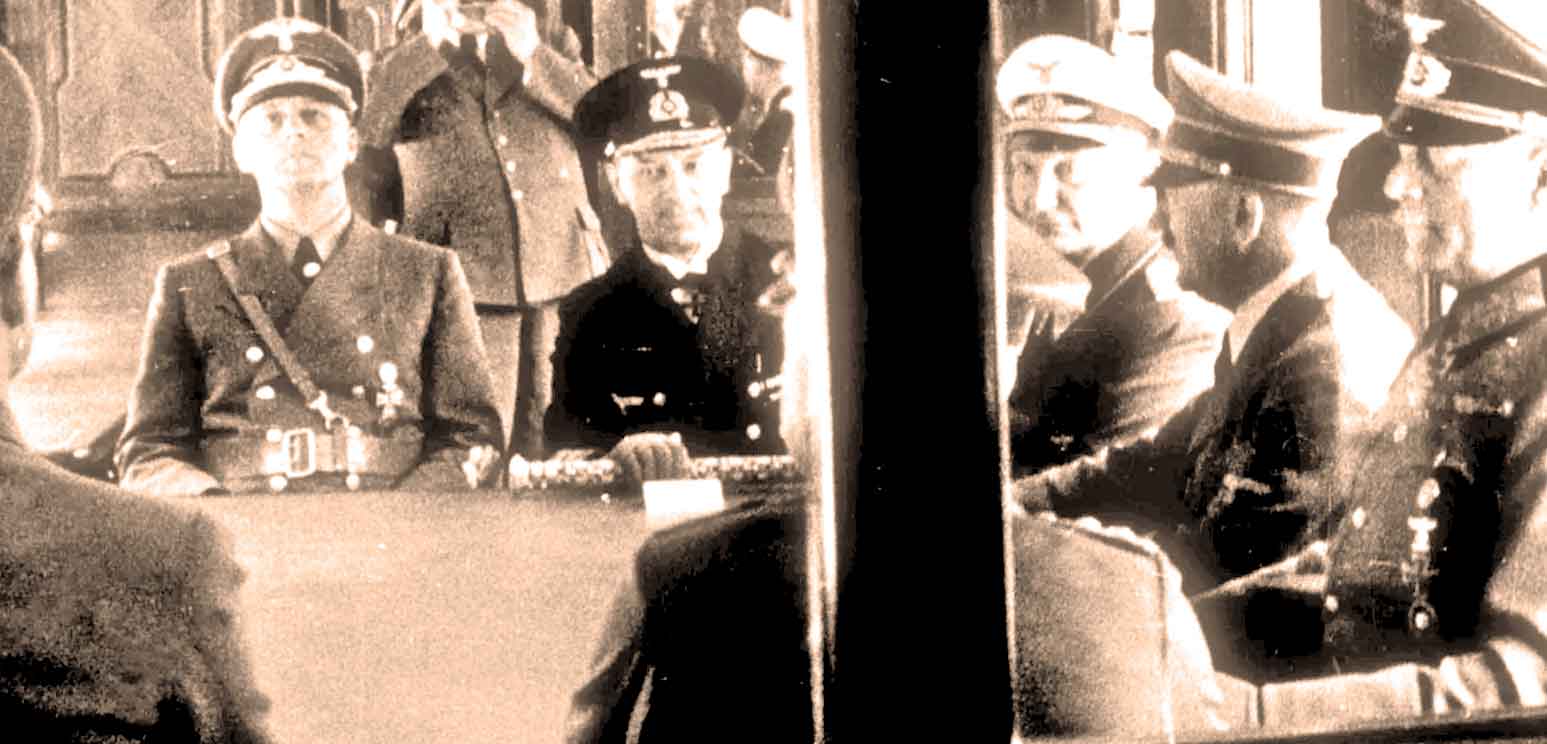
– News – June 21, 1940 – NBC Radio – Gordon Skene Sound Collection –
In echoing the sentiments of the announcer, this was a historic day in world history. The capitulation, surrender and now signing of the armistice between France and Germany was underway. Though not as harsh as many had expected, it still did France no favors. Terms of the armistice were known days beforehand, delivered initially to the French government while in the process of moving to Bordeaux to set up set up quarters. So the terms of the armistice had been known for some days, and the French leaders had some idea what was in store.
The Armistice agreement was officially signed at 18:36 on 22 June near Compiègne, France by officials of Nazi Germany and the Third French Republic. It became effective at midnight on 25 June.
Signatories for Germany included Wilhelm Keitel, a senior military officer of the Wehrmacht (the German armed forces), while those on the French side held lower ranks, including general Charles Huntziger. Following the decisive German victory in the Battle of France (10 May – 25 June 1940) during World War II, this armistice established a German occupation zone in Northern and Western France that encompassed about three-fifths of France’s European territory, including all English Channel and Atlantic Ocean ports. The remainder of the country was to be left unoccupied, although the new regime that replaced the Third Republic was mutually recognized as the legitimate government of all of Metropolitan France except Alsace-Lorraine. The French were also permitted to retain control of all of their non-European territories. Adolf Hitler deliberately chose Compiègne Forest as the site to sign the armistice because of its symbolic role as the site of the Armistice of 11 November 1918 that signaled the end of World War I with Germany’s surrender.
Adolf Hitler had a number of reasons for agreeing to an armistice. He wanted to ensure that France did not continue to fight from French North Africa, and he wanted to ensure that the French Navy was taken out of the war. In addition, leaving a French government in place would relieve Germany of the considerable burden of administering French territory, particularly as he turned his attentions towards Britain. Finally, as Germany lacked a navy sufficient to occupy France’s overseas territories, Hitler’s only practical recourse to deny the British use of them was to maintain a formally independent and neutral French rump state.
And talk of the Armistice dominated the news on this June 21, 1940 from NBC.
And while you’re here . . .you know we don’t run ads – stopped running them more than a few years ago. The ads were noisy and pretty awful and they were a huge distraction, having to wade through a lot of useless barking in order to get to the good stuff. But we still have to pay the bills, and there’s a ton of them and they don’t like to wait. And so we ask you consider becoming a subscriber and support all the stuff we do every day by kicking in what amounts to being an Americano Grande every month to be part of the solution and not the problem. In todays bizarre economy it ain’t much – but it means a ton to Past Daily. All you have to do (and we make this as simple and pain-free as possible) is head over to Patreon (that red box just below that says “Become A Patron” that you click on) and check us out. You can do 7 days free just to kick the tires and take a test drive. And if you like us, hit the subscribe button and become part of our rather haywire little family. Not bad, considering we just want you to like us.