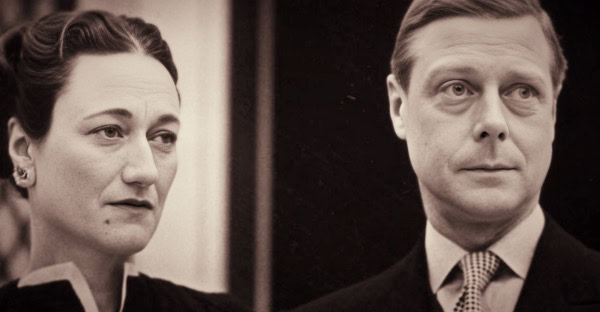
It would not, in all likelihood, create the same aura of suspense and drama in 2024 that it did in 1936. The abdication of King Edward VIII on December 11, 1936 in order to marry Wallis Simpson, and American divorcee and “commoner” created such a massive uproar throughout the British Commonwealth that it was seriously a threat to the continuing of the Monarchy.
And owing to the times and the ominous world ahead, losing a King (albeit one who was purported to be a Nazi sympathizer) could spell disaster for a nation without a leader, even a symbolic one.
At the time, the prime ministers of the United Kingdom and the Dominions opposed the marriage, arguing a divorced woman with two living ex-husbands was politically and socially unacceptable as a prospective queen consort. Additionally, such a marriage would have conflicted with Edward’s status as titular head of the Church of England, which, at the time, disapproved of remarriage after divorce if a former spouse was still alive. Edward knew the Baldwin government would resign if the marriage went ahead, which could have forced a general election and would have ruined his status as a politically neutral constitutional monarch. When it became apparent he could not marry Simpson and remain on the throne, he abdicated. He was succeeded by his younger brother, George VI. With a reign of 326 days, Edward was one of the shortest-reigning British monarchs to date.
After his abdication, Edward was created Duke of Windsor. He married Simpson in France on 3 June 1937, after her second divorce became final. Later that year, the couple toured Nazi Germany, which fed rumors that he was a Nazi sympathizer. During the Second World War, Edward was at first stationed with the British Military Mission to France. After the fall of France, he was appointed Governor of the Bahamas. After the war, Edward spent the rest of his life in France. He and Wallis remained married until his death in 1972; they had no children.
The beginning of George VI’s reign was taken up by questions surrounding his predecessor and brother, whose titles, style and position were uncertain. He had been introduced as “His Royal Highness Prince Edward” for the abdication broadcast, but George VI felt that by abdicating and renouncing the succession, Edward had lost the right to bear royal titles, including “Royal Highness”. In settling the issue, George’s first act as king was to confer upon Edward the title “Duke of Windsor” with the style “Royal Highness”, but the letters patent creating the dukedom prevented any wife or children from bearing royal styles.
Here are those two addresses, as they were broadcast on December 11, 1936 by the BBC and relayed to networks around the world.