

Reverend Charles Jones – Sit-Ins and the Civil Rights Movement – November 4, 1960 – Gordon Skene Sound Collection –
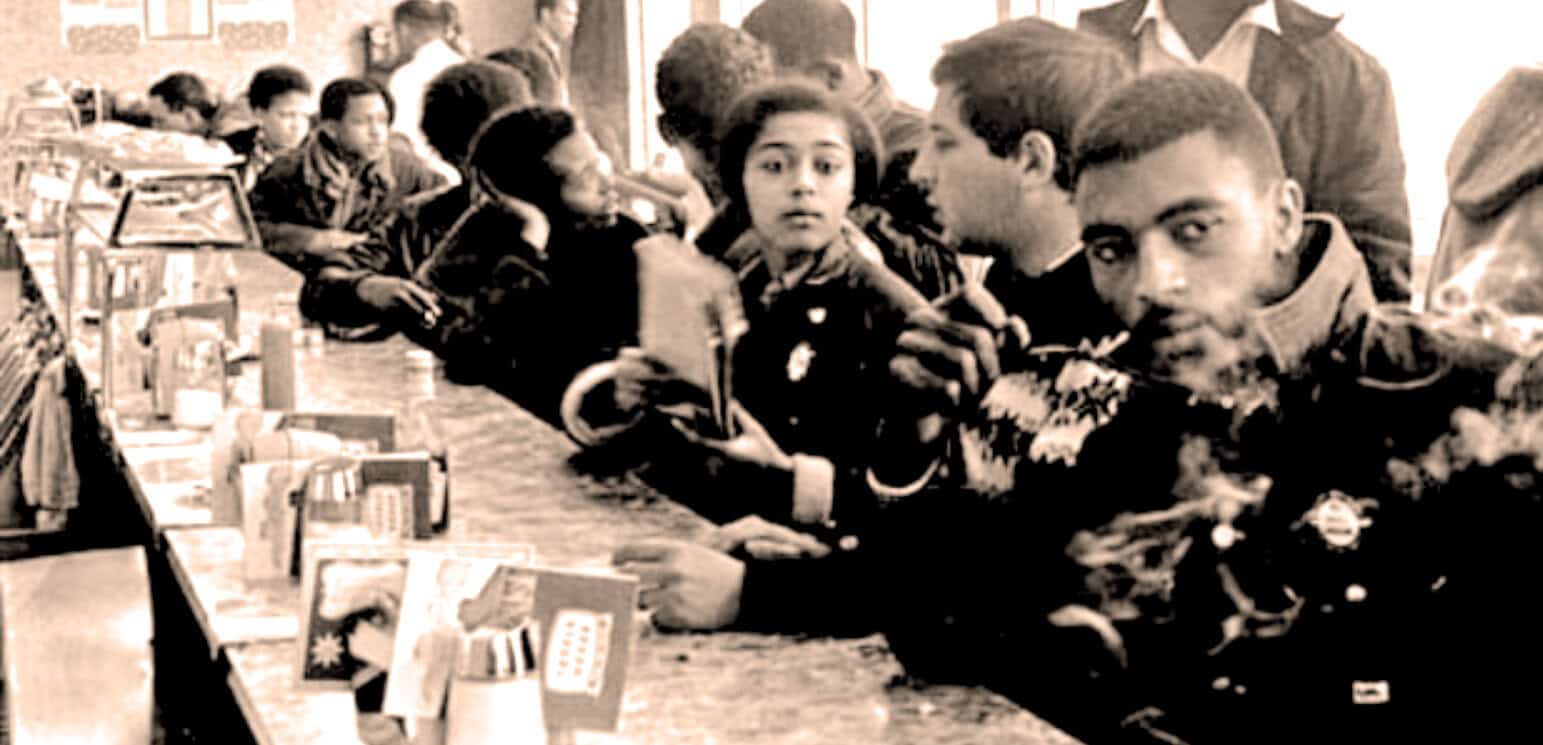
Sit-Ins. During the early days of the Civil Rights Movement and employing what Mohandas Gandhi used during the Protests in India during their struggles for independence, the Sit-In became one of the most utilized, and certainly brave, tools in the Non-Violent part of the Civil Rights movement in the South.
At the forefront of that movement, one which would eventually become the Student Non-Violent Coordinating Committee, was Reverend Charles Jones, a Civil Rights activist who figured prominently in anti-segregation demonstrations in the early 1960s, when he was a founding member of the Student Nonviolent Coordinating Committee, a key group that linked young people with the larger civil rights movement.
He organized some of the first lunch-counter sit-ins in Charlotte and later served a sentence of 30 days of hard labor after refusing to post bail when he was arrested in South Carolina. In the early 1960s, Rev. Jones was part of the Freedom Riders, a group that sought to end segregation on interstate buses in the South. He led voter-registration efforts in Georgia and Mississippi. He was arrested multiple times at demonstrations, including twice with the Rev. Martin Luther King Jr., with whom he was on a first-name basis.
The lunch-counter sit-in that began the movement, however, took place in Greensboro, North Carolina, on the afternoon of February 1, 1960. Four freshmen from the Agricultural and Technical College of North Carolina (North Carolina A&T; now North Carolina A&T State University), a historically Black college, made some purchases at the local F.W. Woolworth department store. They then sat down at the “whites only” lunch counter and placed an order but were refused service. They remained seated and were eventually asked to leave the premises; instead, they stayed until closing and returned the next day with more than a dozen other students. One of the students, David Richmond, acknowledged later that the action began “on impulse”—though the group, who were familiar with Gandhi’s nonviolent protests against the British, had previously discussed taking action against Jim Crow laws—and that the students were surprised at the impact their local initiative had on the entire civil rights movement.
The sit-in movement destroyed a number of myths and stereotypes about Southern Blacks that white segregationists had commonly used to support the Jim Crow system. For example, with widespread and spontaneous demonstrations across the South, it became clear to observers that Southern Blacks were not content with Jim Crow segregation. The grassroots nature of the protest, arising locally from local Black populations, also crushed the myth that all civil rights agitation came from outside the South. Moreover, the nonviolent and courteous behavior of the Black sit-in protesters played well on local and national television and showed them to be responsible people. The cruelty of the segregated system was further exposed when local ruffians attempted to break up the sit-ins with verbal abuse, assault, and violence. The local people who cooperated in sit-ins provided a community of Black citizens willing to agitate for change and to suffer violence for a greater cause.
In this lecture, given at Illinois State University on November 3, 1960, Reverend Jones discusses the concept behind Sit-Ins, the methods used and the affect it had on communities in the South, demonstrating how it was an important element in the Civil Rights Movement.
And while you’re here . . .you know we don’t run ads – stopped running them more than a few years ago. The ads were noisy and pretty awful and they were a huge distraction, having to wade through a lot of useless barking in order to get to the good stuff. But we still have to pay the bills, and there’s a ton of them and they don’t like to wait. And so we ask you consider becoming a subscriber and support all the stuff we do every day by kicking in what amounts to being an Americano Grande every month to be part of the solution and not the problem. In todays bizarre economy it ain’t much – but it means a ton to Past Daily. All you have to do (and we make this as simple and pain-free as possible) is head over to Patreon (that red box just below that says “Become A Patron” that you click on) and check us out. You can do 7 days free just to kick the tires and take a test drive. And if you like us, hit the subscribe button and become part of our rather haywire little family. Not bad, considering we just want you to like us.