
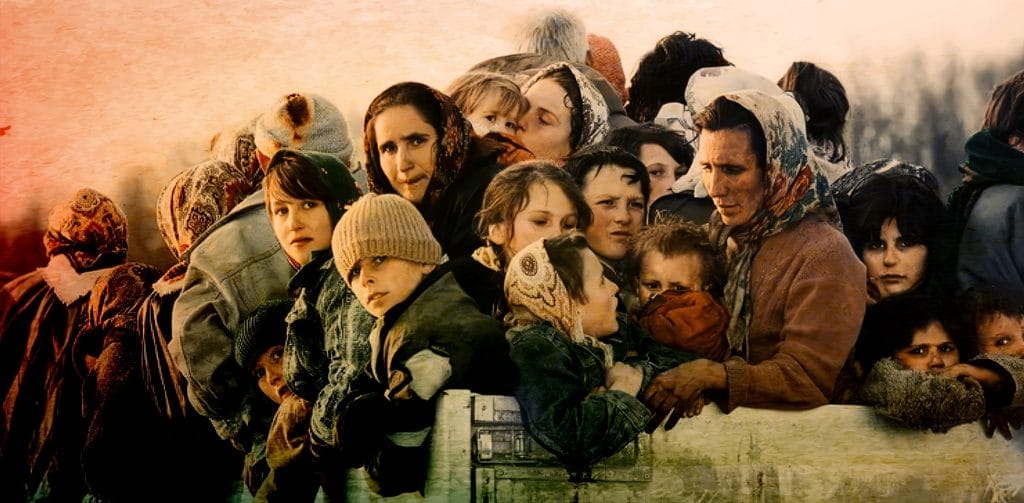
By the autumn of 1998, the war in Bosnia-Herzegovina had officially ended, but for thousands of survivors and families of the dead, the war was far from over. The physical fighting had stopped, yet the questions surrounding some of the conflict’s worst atrocities remained unanswered. Who had ordered the massacres? Who had carried them out? Who bore responsibility for the systematic persecution of civilian populations? And, perhaps most importantly, could justice be achieved after such extraordinary violence? These were among the questions explored by the BBC World Service documentary Assignment, broadcast on October 2, 1998, as preparations were being made for further trials before the International Criminal Tribunal for the former Yugoslavia in The Hague.
Among the atrocities that formed part of this grim history was the massacre at Ahmići, a village in the Lasva Valley of central Bosnia. On April 16, 1993, Bosnian Croat forces attacked the predominantly Muslim village. More than 100 Bosnian Muslim civilians were killed, including women and children, while homes and religious buildings were destroyed. The attack was part of a wider campaign of violence and persecution directed against Muslim communities in the region. The International Criminal Tribunal for the former Yugoslavia would later establish that the attack was part of a broader effort to remove Bosnian Muslims from the Lasva Valley.
What made the situation particularly troubling was that these were not simply random acts of violence committed in the chaos of war. The Tribunal was attempting to determine whether individuals in positions of political and military authority had planned, encouraged, ordered or otherwise facilitated crimes committed against civilians. This represented one of the most important principles behind the Tribunal itself: responsibility for atrocities could extend beyond the person who physically pulled the trigger.
Established by the United Nations Security Council in 1993, the Tribunal was created to prosecute individuals responsible for serious violations of international humanitarian law committed during the conflicts in the former Yugoslavia. Its mandate included murder, torture, rape, persecution, destruction of property and other crimes. By the time of the BBC documentary, more than 160 people had been indicted.
Yet the road from atrocity to justice was anything but simple. The Tribunal faced the enormous problem of reconstructing events that had taken place years earlier, often in villages where buildings had been destroyed, witnesses had been scattered and evidence had disappeared. Survivors had to return to some of the most painful experiences of their lives and testify about what they had seen. The prosecution had to establish individual responsibility rather than simply demonstrate that atrocities had occurred.
That distinction was crucial. A massacre could be established beyond reasonable doubt, but proving who had planned it, who had ordered it and who had knowingly participated in it required evidence. The Tribunal therefore became not merely a place where perpetrators were prosecuted, but also a forum in which the experiences of victims and survivors could become part of an official historical record.
The issue carried consequences far beyond the courtroom. Bosnia’s communities remained deeply divided, and memories of atrocities were inseparable from questions of identity, territory and political power. For survivors, a conviction could never restore a murdered family member or return a destroyed home. Nevertheless, the possibility of establishing individual accountability offered something that the end of the war itself could not provide: recognition that what had happened to them had been a crime, rather than simply another casualty of war.
There was also a larger international question. The Tribunal represented an attempt to demonstrate that political and military leaders could not necessarily escape responsibility simply because their crimes had been committed during a war. The Hague was thousands of miles from the villages of Bosnia, but the proceedings there were intended to establish that distance and time did not automatically erase accountability.
That was the uncertainty hanging over Assignment in October 1998. The trials had yet to tell their full story, and nobody could know precisely how the process would affect Bosnia’s future. Would prosecutions help reconciliation, or would they deepen existing divisions? Could legal judgments satisfy people whose families had been destroyed? Could a courtroom provide a measure of justice where politics and diplomacy had failed?
The answers would take years to emerge. But the significance of the Tribunal was already apparent. The massacres of Bosnia had demonstrated how quickly ethnic hatred, political ambition and armed conflict could turn civilian communities into targets. The proceedings at The Hague represented an attempt to ensure that those crimes would not disappear into the confusion of history. For the victims of Ahmići and countless other communities, the hope was not that the past could be undone, but that it could finally be confronted—and that responsibility for what had happened would have a name, a record and, ultimately, a judgment.
Here is that episode of Assignment from The BBC World Service for October 2, 1998.