September 7, 1945 – News Reports via Shortwave – raising American Flag – first reports from Radio Tokyo Studio – Mutual/KFRC, San Francisco – Gordon Skene Sound Collection –
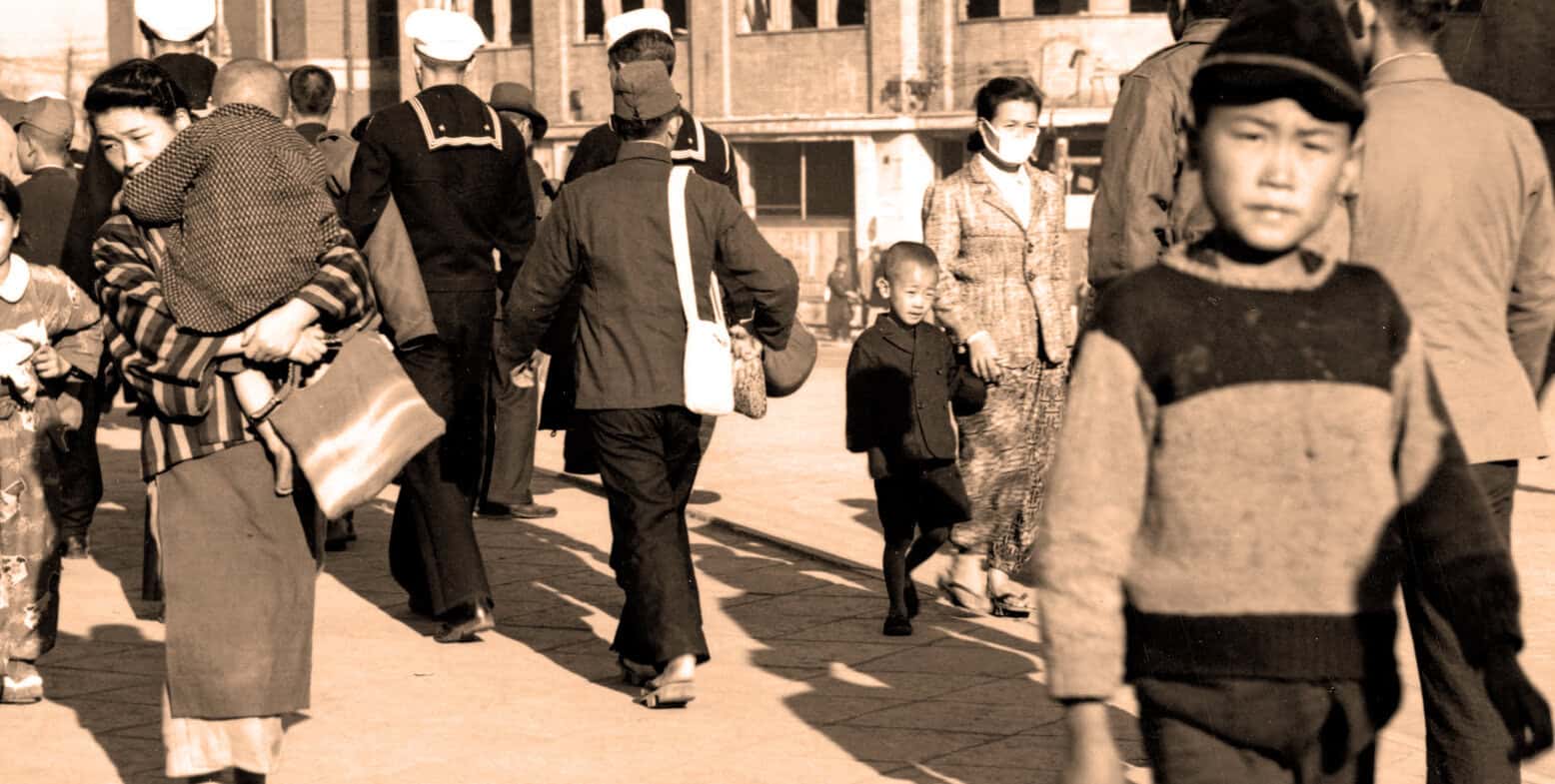
The Allied Occupation of Japan began shortly after signing the official Surrender and the presence of Allied forces in the years immediately following Japan’s defeat in World War II. Led by the United States with the support of the British Commonwealth, the occupation lasted from 1945 to 1952 and involved a total of nearly 1 million Allied soldiers. The occupation was overseen by American general Douglas MacArthur, who was appointed Supreme Commander for the Allied Powers by President Harry Truman; MacArthur was succeeded as Supreme Commander by General Matthew Ridgway in 1951. Unlike in the occupation of Germany, the Soviet Union had little to no influence over the occupation of Japan, declining to participate because it did not want to place Soviet troops under MacArthur’s direct command.
This foreign presence marks the only time in Japan’s history that it has been occupied by a foreign power. At MacArthur’s insistence, Emperor Hirohito remained on the imperial throne. The wartime cabinet was replaced with a cabinet acceptable to the Allies and committed to implementing the terms of the Potsdam Declaration, which among other things called for the country to become a parliamentary democracy. Under MacArthur’s guidance, the Japanese government introduced sweeping social reforms and implemented economic reforms that recalled American “New Deal” priorities of the 1930s under President Roosevelt. Japan’s existing constitution was repealed and replaced by a new, American-written constitution, and the Emperor’s theoretically vast powers, which for many centuries had been constrained only by conventions that had evolved over time, became strictly limited by law. Article 9 of the constitution explicitly forbade Japan from maintaining a military or pursuing war as a means to settle international disputes.
The occupation officially ended with coming into force of the San Francisco Peace Treaty, signed on September 8, 1951, and effective from April 28, 1952, after which Japan’s sovereignty – with the exception of the Ryukyu Islands – was fully restored. However, the simultaneous imposition of the U.S.-Japan Security Treaty ensured that tens of thousands of American soldiers would remain based in Japan indefinitely.
The occupation of Japan can be usefully divided into three phases: the initial effort to punish and reform Japan; the so-called “Reverse Course” in which the focus shifted to suppressing dissent and reviving the Japanese economy to support the U.S. in the Cold War; and the final establishment of a formal peace treaty and enduring military alliance.
Here are the initial reports of the flag raising over Tokyo and the initial presence of Allied forces in the Japanese Capitol from Mutual via shortwave. The reports include a wrapup of the events – an unintentional meltdown of a reporter (not broadcast) and a very awkward interview with four women tourists in San Francisco.
All on September 7, 1945.