By the time the 1950s rolled around, FM radio was getting a firm foothold in American homes. With the advent of the lp and high fidelity, the boxy and cumbersome Radio console was giving way to “components” which emphasized truer sound, it also cultivated a sub-category of society known as the “audiophile”. Things could get expensive. No longer one big console with one big speaker – components offered separate items – elegantly style tuners, amplifiers, receivers, turntables and speakers. The sky was the limit over how elaborate the average listener wanted to be. The Hi-Fi became a status symbol – listening became an art form.
FM Radio played a huge part in this sudden explosion of sound-as-lifestyle as it played an integral part in the listening experience. So FM stations started to become popular – audiences wanted to listen to music in a pristine setting and FM radio was a cultural oasis of sorts. Most stations in major metropolitan areas offered eclectic programming as a way of catering to this newly cultivated crop of music mavens. Classical was probably the biggest draw, followed by Jazz and Folk. Rock n’ Roll was mostly off-limits, unless it was simulcast by an AM counterpart. Otherwise, the airwaves were high-brow.
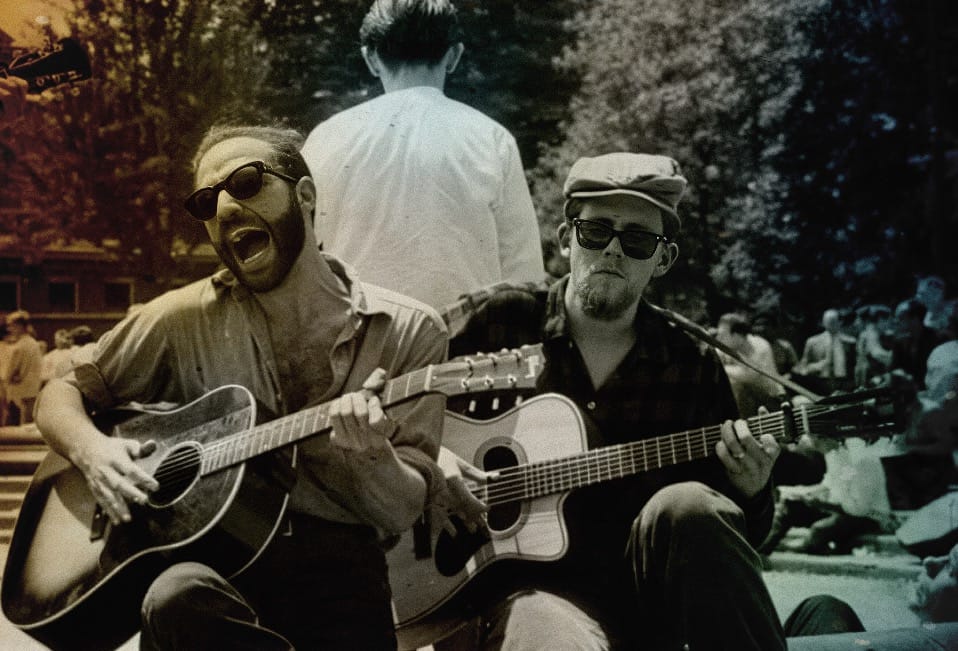
And with the surge in popularity of Folk Music during the 1950s, its mainstream popularity created a genre of “Roots Music” – folkies turned into musicologists, combing archives and libraries for obscure ditties and courting songs of the 1600’s. And a Society of folk singers up and blossomed and coffee houses of The Beat Generation became gathering places for budding folk icons. Folk music became trendy and it would have far reaching influences as the 50s morphed into the 60s and somewhere Rock and Folk hooked up and never looked back.
But to give you some idea of the atmosphere this phenomenon of the 1950s presented, two of the most popular FM stations in the New York area, WNYC and WQXR offered a considerable chunk of programming time to Folk Music and especially Live Folk music. Many programs emanated from Folk clubs around Greenwich Village. Clubs that became springboards for artists who later became icons.
Here is an hour’s worth of programming from a typical weekend night – this one from November 30, 1958 – the occasion is celebrating St. Andrews Birthday in Scotland and much of the music played originated in the British Isles. The beginning of the tape fades after and into each song, so it’s difficult to identify the artist – also the applause is cut out. But whoever was taping on this particular night gave up after a while and let live Radio speak for itself.
It’s a glimpse of radio that, for the most part, doesn’t exist anymore – it also gives credence to the notion that not everyone took to Rock n’ Roll and dropped everything else. People were still open to discovering and being dazzled by the newness of it all. And people could sit at home and be taken to Café Wha, Carnegie Hall or 52nd Street in one night.
Enjoy the shows.