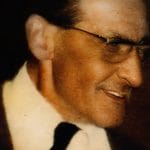
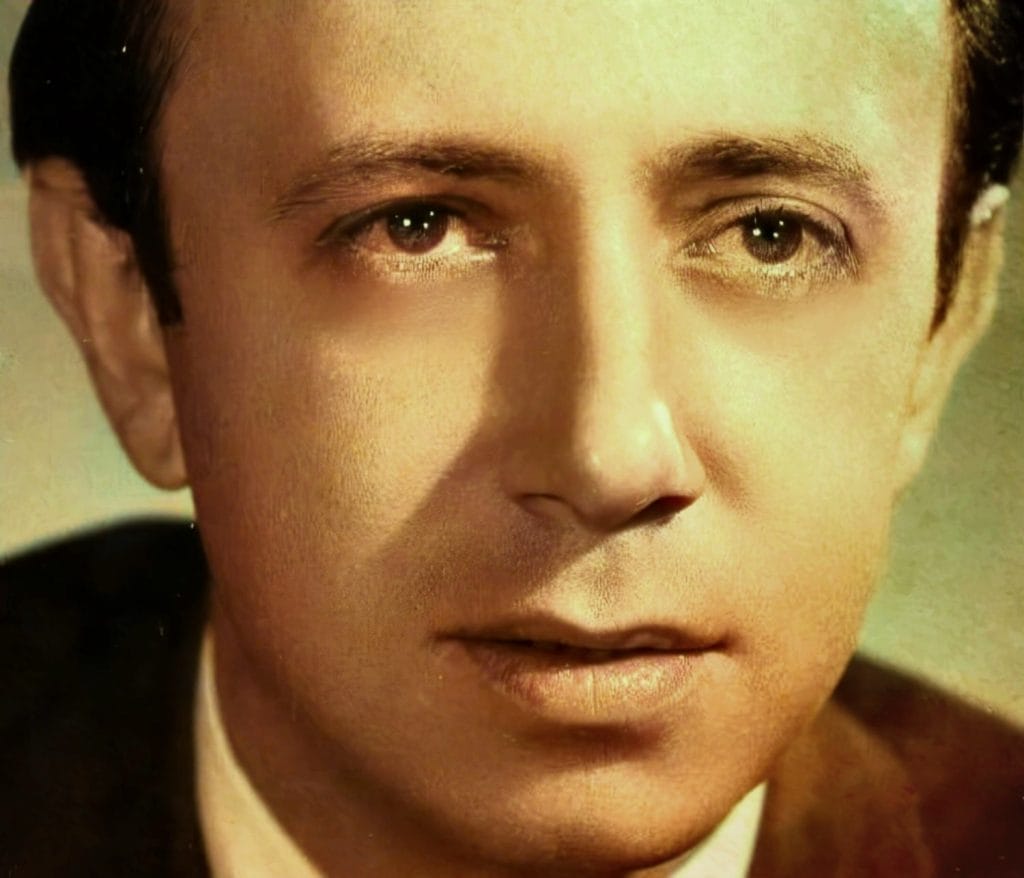
Taking a break from Europe this weekend and looking at Mid-Century American music as composed and interpreted by Morton Gould in this series of short piano works, recorded for Decca Records in New York on October 9, 1940 and issued in a 78 rpm set.
To many aficionados of American Classical music, certainly during the 20th century, the name Morton Gould is probably more closely associated with his work as conductor and arranger of music considered considerably lighter than those of his contemporaries (i.e. Aron Copland), and often times gets lumped in with “novelty composers:” such as Leroy Anderson.
But Morton Gould was serious and many of his works have ranked alongside Copland and Harris for their vitality and sincere expression of Americana from the WPA period of the 1930s onward.
Gould composed Broadway scores such as Billion Dollar Baby and Arms and the Girl; film music such as Delightfully Dangerous, Cinerama Holiday, and Windjammer; music for television series such as World War One and the miniseries Holocaust; and ballet scores including Interplay, Fall River Legend, and I’m Old Fashioned.
Gould’s music was commissioned by symphony orchestras all over the United States and was also commissioned by the Library of Congress, The Chamber Music Society of Lincoln Center, the American Ballet Theatre, and the New York City Ballet. His ability to seamlessly combine multiple musical genres into formal classical structure, while maintaining their distinctive elements, was unsurpassed, and Gould received three commissions for the United States Bicentennial.
As a conductor, Gould led all of the major American orchestras as well as those of Canada, Mexico, Europe, Japan, and Australia. With his own orchestra, he recorded many classical standards, including Gershwin‘s Rhapsody in Blue, on which he also played the piano. Gould arranged and conducted instrumental music from many genres (classical, light classics, “pops”, Broadway, jazz standards, and Latin American) on dozens of LP record albums for major record labels (often RCA Victor), usually credited to Morton Gould and his Orchestra. He won a Grammy Award in 1966 for his recording of Charles Ives‘ first symphony, with the Chicago Symphony Orchestra. In 1983, Gould received the American Symphony Orchestra League‘s Gold Baton Award. In 1986 he was elected to the American Academy and Institute of Arts and Letters.
For many decades Gould was an active member of ASCAP (American Society of Composers, Authors and Publishers). He sat on its board from 1959 and served as president from 1986 until 1994.[2] During his tenure, he lobbied for the intellectual rights of performing artists as the internet was becoming a force that would greatly affect ASCAP’s members.
Incorporating new styles into his repertoire as they emerged, Gould incorporated wildly disparate elements, including a rapping narrator in a work titled “The Jogger and the Dinosaur,” American tap dancing in his “Tap Dance Concerto” for dancer and orchestra, and a singing fire department titled “Hosedown”—commissioned works for the Pittsburgh Youth Symphony. In 1993, his work “Ghost Waltzes” was commissioned for the ninth Van Cliburn International Piano Competition. In the same year, he received the El Premio Billboard for his contributions to Latin music in the United States. In 1994, Gould received the Kennedy Center Honor in recognition of lifetime contributions to American culture.
In 1995, Gould was awarded the Pulitzer Prize for Music for Stringmusic, a composition commissioned by the National Symphony Orchestra in recognition of the final season of director Mstislav Rostropovich. In 2005, he was honored with the Grammy Lifetime Achievement Award. He also was a member of the board of the American Symphony Orchestra League and of the National Endowment for the Arts music panel. Gould’s original manuscripts, personal papers and other pertinent pieces are archived in the Library of Congress and available to the public.
For an example of the Composer/Performer, this set, his only series of recordings for Decca Records and one of the few that focused solely on his own repertoire, offers a glimpse of the versatility of Morton Gould, and gives some idea of what an extraordinary solo pianist he was.
Here are the pieces featured:
- Pavanne
- The Prima Donna
- American Caprice
- The Child Prodigy
- Tropical
- The Ballerina
- Deserted Ballroom
- Gavotte
Enjoy.